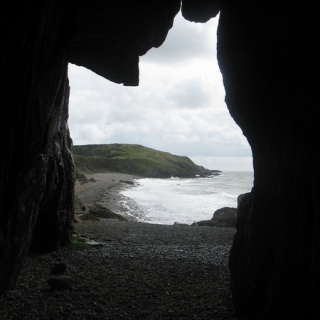
St Ninian’s Cave
St Ninian’s is a site of early Christian worship in Scotland and a site of pilgrimage. Local tradition has it that St Ninian would use the cave as retreat. Ninian (aka Trynnian or Ringan)...
St Ninian’s is a site of early Christian worship in Scotland and a site of pilgrimage. Local tradition has it that St Ninian would use the cave as retreat. Ninian (aka Trynnian or Ringan)...
Early Christianity / Hauntings
by Ian · Published October 31, 2013 · Last modified December 28, 2018
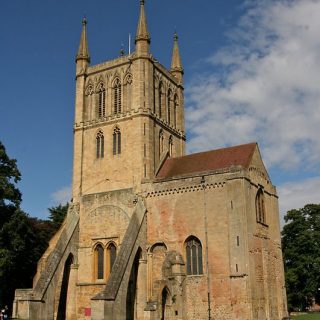
The Anglican Parish Church of Pershore Abbey was originally part of an Anglo Saxon abbey, the ruins of which were thought to be haunted in the early 20th century.
Apparitions / Early Christianity / Featured Sites / Hauntings / Legends / WWI Hauntings
by Ian · Published October 18, 2013 · Last modified November 14, 2018
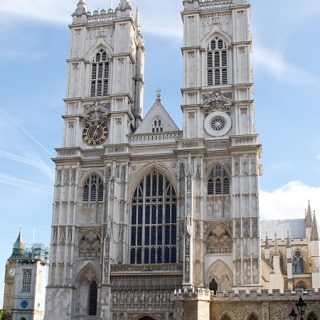
Since 1066AD, Westminster Abbey has been the traditional coronation and burial site for British monarchs, but there are no members of the Royal family among the ghosts that reputedly haunt here.
Apparitions / Early Christianity / Hauntings
by Ian · Published August 31, 2013 · Last modified December 26, 2018
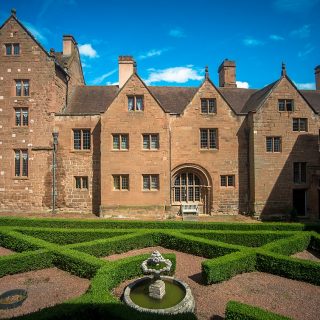
The Grade I listed Stoneleigh Abbey is country mansion dating from the 16th century, built in the grounds of a Cistercian Abbey which had been founded in 1154 and destroyed after the Dissolution of the Monasteries by King Henry VIII. ‘A History of the County of Warwick: Volume 2’ (1908) gives the following historical background of the Abbey.
Ancient Sites / Early Christianity / Folklore
by Ian · Published August 13, 2013 · Last modified November 23, 2018
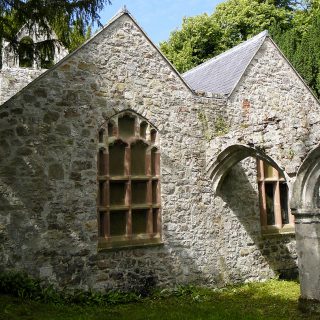
St Nidan’s Church in Llanidan is associated with a stone that had strange magical like properties including aiding fertilisation and having the power to move on its own. Wirt Sykes in his British Goblins (1881) mentions that ‘The old British historian Nennius speaks of a stone, one of the wonders of the Isle
Ancient Sites / Early Christianity / Legends
by Ian · Published August 8, 2013 · Last modified December 9, 2018
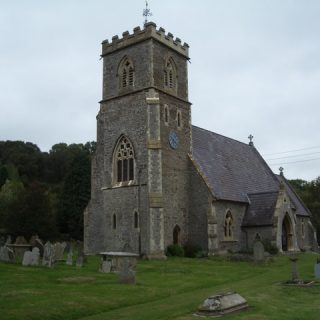
The medieval church of St Meilig was rebuilt in 1853, though the bottom of the tower may be a remnant of the earlier building. Inside the church is a standing stone with a cross carved into it, which possibly dates from the 6th or 7th century. The stone which is thought to have stood at or near the site of a 6th century monastery founded by St Meilig at Croesfeilig.
Early Christianity / Folklore / Folktales / King Arthur / Legends / Welsh Folktales
by Ian · Published August 3, 2013 · Last modified November 23, 2018
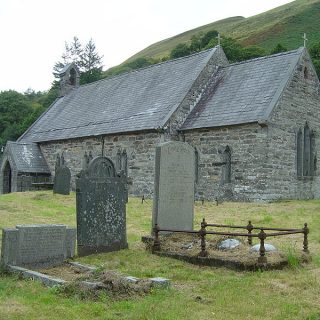
In the village of Llanymawddwy, there is an ancient church dedicated to St. Tydecho, thought to be the son of Anna Pendragon, King Arthur’s sister. Wirt Sykes in British Goblins (1881) gives the following tale of St. Tydecho and a blue stone. ‘There was a stone in the valley of Mowddwy, which did good service for the church. A certain St.

Ancient Sites / Early Christianity / Folklore / Folktales / Merlin / Welsh Folktales
by Ian · Published July 29, 2013 · Last modified January 1, 2019
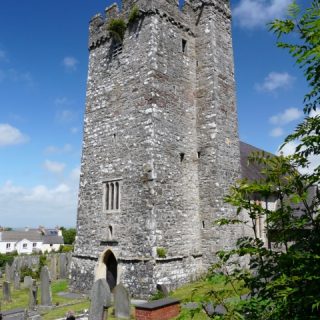
Llech Lafar, a speaking slab of marble by the River Alun is referred to by Wirt Sykes in his ‘British Goblins’ (1881). ‘The Talking Stone Llechlafar, or stone of loquacity, served as a bridge over the river Alyn, bounding the churchyard of St. David s in Pembrokeshire, on the northern side.
Ancient Sites / Early Christianity / Wells
by Ian · Published July 26, 2013 · Last modified January 1, 2019
St. Illtyd’s Well or the Butter Well as it is also known, can be found in a private garden near the Church of St Rhydian and St Illtyd in Llanrhidian. It acquired the name Butter Well after an event in the 12th century when milk apparently flowed from it for three hours.
Ancient Sites / Articles / Articles / Celtic Pantheons / Early Christianity / Folklore / Pantheons
by Ian · Published July 24, 2013 · Last modified January 1, 2019
There is a general acceptance that the Green Man is a representation of a pagan deity, but this is not borne out by the abundance of Green Man carvings to be found on or within Christian churches. Could this contradiction be the clue that will lead to our understanding of this archaic figure? Why do we find the Green Many associated with churches?
More
Necessary cookies are absolutely essential for the website to function properly. This category only includes cookies that ensures basic functionalities and security features of the website. These cookies do not store any personal information.
Any cookies that may not be particularly necessary for the website to function and is used specifically to collect user personal data via analytics, ads, other embedded contents are termed as non-necessary cookies. It is mandatory to procure user consent prior to running these cookies on your website.
Recent Comments