You are hereFolklore
Folklore
Carlin Maggie Stone
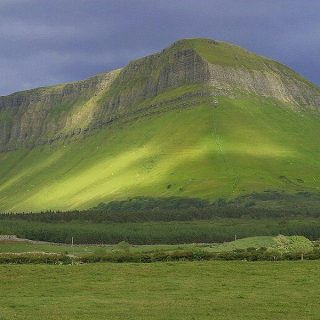
Carlin Maggie's stone is a 40-foot natural stone column formed of volcanic basalt. Read More »
Carreg Cennen Castle
The ruined castle has a wishing well, which had the ability to heal eye and ear disorders. The well is reached via an underground tunnel that leads to a cave. Traditionally one had to leave a pin in its waters and then make the wish. Prehistoric skeletons have also been uncovered from within this cave, and it is likely that it was used in ancient times as a place of reverence. Read More »
Castell Tomen-y-Mur, (a.k.a. Mur-y-Castell and Heriri Mons)
Tomen-y-Mur (translated as ‘Mound in the Walls’) was originally an ancient Roman fort on the slope of Mynydd Maentwrog to the north east of Llyn Trawsfynyedd, with access from A470 although it is not signposted. Read More »
Castle Howe
The site of a fairy home on the banks of Bassenthwaite Lake.
Castle Wildenstein
Castle Wildenstein (Schloss Wildenstein) dates from the around the 16th century and has acquired a reputation for being haunted. According to John and Anne Spencer in The 'Encyclopedia of Ghosts and Spirits', on 1st March 1953, Baroness von Lobenstein reported seeing an apparition of a young boy in a sailor suit stood in the kitchen. Read More »
The Cerne Abbas Giant
The Cerne Abbas Giant or the 'Rude Man' is one of the largest hillfigures in Britain, he (the figure's gender is beyond doubt) is one of two representations of the human form, the other being the Long Man of Wilmington in East Sussex. The giant, carved in solid lines from the chalk bedrock measures in at 180 feet high, and carries a huge knobbled club, which measures 120 feet in length. Read More »
Chance To Be Part Of Project Albion
ASSAP (The Association for the Scientific Study of Anomalous Phenomena) in partnership with Mysterious Britain & Ireland is opening up its long running Project Albion to enable members of the public to directly contribute towards it. Read More »
Changelings
Changelings are part of Western Folklore, a child of a fairy type (Elf, Troll etc) which has been secretly swapped for a human baby and left in its place. George Waldron gave the following description of one he saw in the Isle of Man and it was subsequently reprinted in ‘The Science of Fairy Tales’ (1891) by Edwin Sidney Hartland. Read More »
Changelings In The Borders
Edwin Sidney Hartland gives the following account of Dumfries and Galloway Changelings in his ‘The Science of Fairy Tales’ (1891). ‘A Kirkcudbrightshire tale represents a child as once left in charge of a tailor, who "commenced a discourse" with him. "'Will, hae ye your pipes?' says the tailor. 'They're below my head,' says the tenant of the cradle. Read More »
Charmed Irish Stones
There is a tradition in the North of England and Scotland pertaining to special stones brought over from Ireland that have the ability to heal snake bites on cattle. In Irish Charms in Northern England, Denzil Webb referred to an article by William Morley Egglestone, which appeared in the March 1889 edition of the Monthly Chronicle of North-Country Lore and Legend. Read More »
Chibbyr Undin & Chibbyr Unjin Holy Wells Of Malew
Chibber Undin (Chibbyr Undin) - The Foundation Well or Chibber Undin when written about in the late 19th century was described as being close to the remains of an ancient Keeill which a Manx word for cell or chapel and these remains are often quoted as measuring 21 feet long by 12 feet broad. Read More »
Church of St John the Baptist, Northorpe
According to tradition, the churchyard of the Grade I listed St John the Baptist’s Church in Northorpe was reputedly haunted by a black dog. In County Folk-Lore, By Mrs Gutch and Mabel Peacock, 1908 they state that the dog ‘went by the well-known name of the Bargest’. Read More »
Clegg Hall
Clegg Hall is a Grade II listed building dating from the 17th century. Some time between 1910 and 1920 the Hall fell into ruin and remained so until recently. It was put up for sale in 2011 and is a private residence. The Hall is of interest for it has Boggart story associated with it. Read More »
Cley Hill
Cley hill has a Devil legend attached to it. The Devil was travelling from Somerset carrying a huge sack of earth, with which he intended to bury the town of Devises. The people of the town had offended him in some way probably by converting to Christianity. Read More »
Clitheroe Castle
It has been suggested in Roby’s Traditions of Lancashire, that the Motte and Bailey Clitheroe Castle may date back to before 1086, being built by Roger de Poictou (also known as Roger Pictavensis). Roger was a supporter of King William I and was granted 398 Saxon Manors following the Norman invasion of 1066. Read More »
Cobs And Knops
Cobs and knops were hobgoblins, much feared. They were originally demon horses, and it is clear that belief in them remained strong in Warwickshire, for in parts of the county on All Souls' Day (2nd November) those brave enough went out carrying a simulated horse's head covered with a sheet to frighten the timid.
[The Folklore Of Warwickshire (1976) by Roy Palmer]
Combe Sydenham
Combe Sydenham is associated with a legendary story concerning Sir Francis Drake, and another historical figure, George Sydenham, who has also become the subject of folklore. Read More »
Common Riding, Langholm
Every last Friday in July is the Common Riding in Langholm. The festival dates back to the 1700s when rights to common lands were awarded to the burgh of Langholm - although it takes place on the date of an earlier fair. These lands were marked out by ditches cairns and beacons, which originally fell to the responsibility of one man. Read More »
Conwy & Conwy Bay
In legend a curse was put upon the town and its entire people by a mermaid hundreds of years ago. She was found stranded on the rocks at low tide by local fishermen, who would not return her to the water no matter how much she begged. She cursed the town saying that the people would always be poor. The curse is now said to have run its course. Read More »
Crail
A large stone, close to the churchyard is said to have been thrown by the Devil from the Isle of May. It is possible that the stone was part of a sacred site here before the church. Read More »
Creech Hill
The Creech Hill Bullbegger is said to haunt the area, as a tall apparition who laughs manically from the hillside. A Bullbeggar is the local name for a boggart or mischievous spirit. Read More »
Crossroad Blues
“I went down to the Crossroads, fell down on my knees” Robert Johnson.
When Robert Johnson sang of the Crossroads down in the 1930’s Mississippi Delta, he was paying homage to a tradition that has existed in varied forms for centuries, and at the same time adding his own contribution to the wealth of folklore that exists around the crossing place of two highways. Read More »
Croydon Hill
Croydon Hill is the scene of a peculiar English Folktale, that may or may not have its root in real events. Whatever the truth of the tale the hill has a reputation of being haunted by unearthly howls, especially on dark and stormy nights, and here is the story to account for this unearthly manifestation: Read More »
The Dale Cockatrice
A Cockatrice was supposedly killed here when the peat in which it was hiding were set on fire. It had, according to local tradition been found whilst still in its egg. A woman had got her hen to sit on the egg until it hatched. Unfortunately when it hatched it ate the hen's chicks then ran off. Read More »
Dando and The Wild Hunt
There are many tales to explain the origin of the spectral wild hunt, this one is from the Parish of St Germans in Cornwall. It explains how a priest with low morals became a demon huntsman.
In the medieval period the priest of the parish of St Germans was called Dando. Dando was not a figure of priestly virtue but abused his powers to enjoy earthly delights. Read More »