You are hereFolklore
Folklore
Ellyllon
According to 'British Goblins' (1881) by Wirt Sykes; 'The Ellyllon are the pigmy elves who haunt the groves and valleys, and correspond pretty closely with the English elves. Read More »
Elva Hill
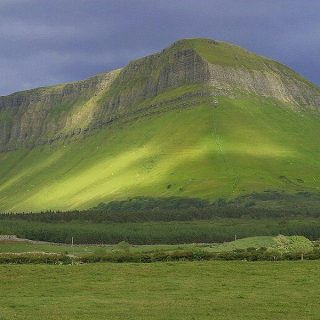
Elva Hill is known as a fairy hill and the name may be derived from an old Viking name meaning place of the elves. A stone circle on its slope suggests ancient ritual use of the area, only 15 stones of the original 30 remain. The circle is on private land belonging to Elva Farm, but there is a nearby footpath. The site is thought to date from Neolithic times. Read More »
English Fairies Quick Guide
Abbey Lubbers - Abbey lubbers were spirits who haunted the abbeys of 15th century England. They were said to be the cause of drunkenness and debauchery amongst monks. They especially haunted the abbey wine cellars.
The Apple Tree Man -The spirit of the oldest tree in Somerset orchards, he was responsible for the orchards fertility. Read More »
Eo Rossa
The Eo Rossa or Eó Ruis (Yew of Ross) was one of the five sacred trees of Ireland (the Bile* Trees or the Bileda) and said to grow by the River Barrow at Leighlinbridge. It grew from three natured berries from a branch born by the Irish God, Trefuilngid Tre-ochair (Triple Bearer of the Triple Key, Master of All Wisdom and consort of Macha, the triple goddess). Read More »
Eynhallow, Ancestral Home Of The Finfolk
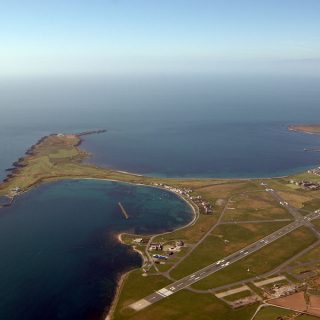
On 14th July 1990, eighty-eight bird watchers got off a ferry organised by the Orkney Heritage Society and the Royal Society for the Protection of Birds at the uninhabited Eynhallow Island. Only eighty-six returned for the journey back, which sparked a huge search and rescue operation involving the police and coastguard. Read More »
Fachan
The Fachan (Fechan or Fachin or Peg Leg Jack) is a found in Scots-Irish Folklore. A Fachan's appearance is so terrible it was known to cause heart attacks. It has one eye, one leg, one withered arm coming out of it's chest and a mane of black feathers. Read More »
Fairies of Llyn Dwythwch
Children were often warned in the past about the dangers of fairies and John Rhys in his 'Celtic Folklore Welsh And Manx' (1901) vouched for an account from a lady who grew up in Cwm Brwynog thirty to forty years earlier. Read More »
Fairy Boy of Borgue
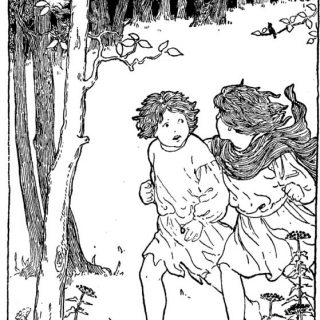
In the village of Borgue there lived a young boy who the locals suspected had a relationship with the faeries. Read More »
The Fairy Boy of Leith
The story of the Fairy boy of Leith is relatively unknown today, and doesn't appear to have been recently recounted since its last appearance in the 1970s Reader's Digest compendium, Folklore, Myths a Read More »
Fairy Bride Of Beddgelert
In ‘The Science of Fairy Tales’ (1891), Edwin Sidney Hartland mentions the following story from Beddgelert where a stolen fairy lady ‘would only consent to be the servant of her ravisher if he could find out her name. Read More »
Fairy Gold Of Cwmglas Hollow
According to John Rhys in his 'Celtic Folklore Welsh And Manx' [1901] 'The following is a later tale, which Mr. Thomas Davies heard from his mother, who died in 1832:--'When she was a girl, living at Yr Hafod, Llanberis, there was a girl of her age being brought up at Cwmglas in the same parish. Read More »
Fairy Midwife Of Beddgelert
In 1891 the following folk tale appeared in 'The Science of Fairy Tales; An Enquiry Into Fairy Mythology' by Edwin Sidney Hartland. It is one of a number of stories in which human midwives are needed at fairy births. Read More »
Fairy Nurse
There lived a woman in Innish Shark -- one of the group of islands on the eastern coast -- named Biddy Mannion, as handsome and likely a fisherman's wife as you would meet in a day's walk. She was tall, and fair in the face, with skin like an egg, and hair that might vie with the gloss of the raven's wing. Read More »
Fairy Ointment
Once upon a time there was, in this celebrated town [Tavistock], a Dame Somebody, I do not know her name, and as she is a real character, I have no right to give her a fictitious one. All I with truth can say, is, that she was old, and nothing the worse for that; for age is, or ought to be, held in honor as the source of wisdom and experience. Read More »
Farmer Who Lost His Way
According to ‘The Science of Fairy Tales’ (1891) by Edwin Sidney Hartland, ‘A Manx tale, which can be traced back to (George) Waldron, narrates the night adventure of a farmer who lost his way in returning home from Peel, and was led by the sound of music into a large hall where were a great number of little people feasting. Read More »
Faroe Islands Mermaid
In 1723 a Royal Commission from Denmark visited the Faroe Islands in the Norwegian Sea to investigate claims of a mermaid being in the area. They saw a merman approach their ship, submerge then surface to stare at them intently with deep set eyes. Unsettling those aboard, the vessel was commanded to withdraw and as it pulled away, the creature puffed out his cheeks, roared and submerged again. Read More »
Fence Rail Dog
The Fence Rail Dog is an enormous hound, nearly ten feet in length, which haunts a stretch of Route 12 near Frederica in Delaware. Mentioned by Charles J. Adams III, a Pennsylvania-based author on paranormal topics, the dog appears in the wake of automobile accidents on the road. Read More »
Fetching a Halter
The following folk tale entitled 'Fetching a Halter' appeared in 'The Welsh Fairy Book' (1908) by W. Jenkyn Thomas 'A VERY large company came together to hold a merry evening at Bwlch Mwrchan, a farmhouse close by Lake Gwynan, in Snowdonia. It was a stormy night. The wind whistled and howled in the woods, tearing the trees like matchsticks. Read More »
The Feytin' Ape
Here’s a tall tale I collected from a local character when I was researching folklore in Oldham, Lancashire. While the tale is purely fictional it does include some half truths and was ‘doing the rounds’ of the local pubs. Read More »
Ffrith Farm Ghost
The following piece of Ghost lore, which describes poltergeist like activity was given to Elias Owen by a schoolmaster, Mr. Read More »
Ffynnon Elian (St. Elian's Well)
St Elian’s Well, like most Holy Well’s was associated with having healing properties until around 1723 when it developed a reputation for being a cursing well. Thought to have sprang forth to quench the thirst of St Elian in the 6th century, the well was a source of pilgrimage for many centuries. Read More »
Ffynnon Lloer
This mountain lake is situated within the Carneddau range in Snowdonia. The lake has an area of approximately 6 acres, is 250 metres long and is overshadowed by the peaks of Pen yr Ole Wen (the seventh highest peak in Wales (3209 feet)) and Carnedd Dafydd (the third highest peak in Wales (3425 feet)). Read More »
Ffynnon Tegla (St Tegla’s Well)
Ffynnon Tegla, (or St Tegla’s or St Tecla’s Well) can be found on private land* near the River Alyn in Llandegla (Llandegla-yn-Iâl). Read More »
Flibbertigibbet
The flibbertigibbet was a night demon who 'mopped and mowed' between the ringing of the curfew bell and the crowing of the first cock, with the object of terrifying young women.
[The Folklore Of Warwickshire (1976) by Roy Palmer]
The Flying Dutchman
The Flying Dutchman is the most famous example of a phantom ship, although its true origins are now lost in the mists of time. It is the prime folk motif of this type, appearing in various adaptations and in literature, most recently given graphic solidity in the Pirates of the Caribbean films. Read More »