You are hereApparitions
Apparitions
Black Abbey, Accrington
Three Cistercian monks were murdered by the inhabitants of Accrington in the late 13th century and according to tradition a local haunting dates back to this time. 'A History of the County of Lancaster: Volume 6' (1911) gives the following information about the historical events.
Read More »
Black Calf Of Narberth
Wirt Sykes in his British Goblins (1881) tells us of what may have been the ghost of an animal or as those in the North of England may refer to as a hairy ghost. However, this one, according to Sykes may have been something more sinister. Read More »
Black Heddon
This area was haunted by a bright glowing ghost female ghost. This type of ghost has acquired a name due what it wears and is known as a Silky. She would appear in silken attire and according to An Encyclopaedia of Occultism by Lewis Spence, would be "rattling in her silks". The spirit would terrify travelers foolish enough to venture into the night. Read More »
Black Prince
An article about Dartford Heath on the Perception 9 website refers to the ghost of a knight that is thought to be the "Black Prince" which has been seen towards Bexley, near to the old Rochester Way.
Blackwall Tunnel
A phantom hitchhiker reputedly haunts the Blackwall Tunnel which runs under the River Thames between Greenwich and Tower Hamlets in London. The usual account of a motorcyclist picking up the hitchhiker in 1972 seems to have changed slightly over time. In some versions the hitchhiker is male, others female. Read More »
Blandy House, Henley on Thames
Now a dental practice, the Grade II listed Blandy House on Hart Street was the home of Mary Blandy, who was executed on 6 April 1752 for poisoning her father, Francis Blandy. Read More »
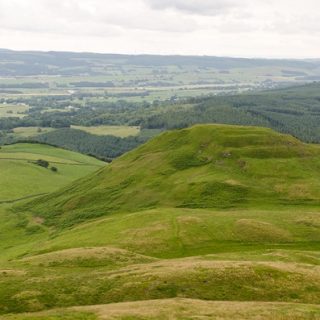
Blencathra Mountain (The Saddleback)
This mountain is one of the locations associated with an army of sleeping knights, this time King Arthur and his men, waiting for the call to arms when he is most needed. In old Cumbrian, Blencathra means 'Devils Peak'
Directions: A footpath leads to the hill from Blencathra Centre. Read More »
Blenheim Palace
The house is said to be haunted by the ghost of a Roundhead, a soldier fighting on the side of Cromwell during the English Civil war. He appears sitting near to the fire in one of the bedrooms. Read More »
Blue Bell Hill
There are many reports here of a phantom hitchhiker on the A229 south of Chatham. The reports began in 1968, and usually involved a young girl (possibly a bride to be or a bridesmaid who was killed at the foot of the hill in 1965), flagging down cars and asking for a lift.
Boldon Lane, South Shields
The following article by Mike Hallowell entitled Strange goings-on in ‘Spooky Valley’ was published in the Shields Gazette on 21 February 2013. Read More »
Borley Rectory
The haunting of the Borley Rectory during the 1920s and 1930s, is undoubtedly one of the most famous in Britain, as well as being one of the most controversial. There seems to be a consensus among many people that the rectory was never really haunted at all, all phenomena being put down to fraud, misinterpreted natural phenomena, and the will of Harry Price to create an interesting case. Read More »
Bottlebush Down
A horseman garbed in Bronze Age attire has been seen on Bottlebush Down. He disappears into a long barrow from the site of a cursus on the B3081. Many witnesses including respected Archaeologists have seen the spirit. Bottlebush Down seems to have been important to early man and is littered with his remains.
Bovington Tank Museum
The tank museum is home to a German Tiger Tank that saw service during World War II. A figure in WWII era German military uniform was once seen looking at the tank through the museum windows. It has been speculated that the figure is the ghost of a one time occupant of the tank. This is maybe the last remaining operational Tiger Tank. Read More »
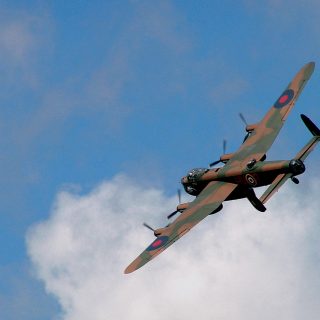
Bow Street Phantom Lancaster Bomber
There are a few cases of phantom aircraft still flying the skies of Britain and we were recently contacted by a witness called Doug about a ghostly Lancaster Bomber seen in the early 1960’s. Read More »
Bowood House
In December 1772 the theologian and scientist Dr Joseph Priestley (born 1733 – died 1804) was appointed by Sir William Fitzmaurice/Petty, 2nd Earl of Shelburne (and from 1784 1st Marquis of Lansdowne) (born 1737 – died 1805) as his librarian, literary companion and tutor to his two sons. Read More »
Bramber Castle
The ruin of Bramber Castle is reportedly haunted by ghostly children that have been witnessed there. They are supposed to be the children of William De Braose, 7th Baron Abergavenny, 4th Lord of Bramber, who displeased King John I and as a result had his children captured and starved to death Read More »
Bristol Cathedral
The origins of Bristol Cathedral date back to 1140, when Robert Fitzharding(e) founded St Augustine’s Abbey on the Deanery Road site and it is a phantom monk that is said to remain and haunt the building. This abbey was designed in the Norman style though very little of this remains today, though the gatehouse and chapterhouse are 12th century. Read More »
Bristol Old Vic
Work commenced on the construction of The Theatre Royal, Bristol (home of ‘The Bristol Old Vic’ theatre company) in 1764 and the first performance was held there on 30th May 1766. According to a 2002 Bristol Evening News article; ‘the old Bristol theatre is reportedly haunted by the ghost of actress Sarah Siddons and her repeat performances at the theatre are the stuff Read More »
British Museum Underground Railway Station
Opened on 30 July 1900, British Museum Station at Bury Place served the Central Line on London’s underground rail network. The station was closed on 25 September 1933 when platforms for the Central Line opened at the nearby Holborn Station. Read More »
Broadwick Street, London
Broadwick Street was originally known as Broad Street and apart from being the site of a major outbreak of Cholera on 31 August 1854, about a hundred years earlier an apparitional experience was reported here. The following account of the experience was published in 'The Haunted Homes and Family Traditions of Great Britain' (1897) by John Ingram. Read More »
The Brocket Arms, Ayot St Lawrence
This old pub, parts of which date to the 14th Century, was a stop of point for pilgrims on their way to St Albans Abbey. It is not far from Minsden Chapel, which is also haunted. A local legend suggests a tunnel exists from the pub to the Chapel or to the ruined church in the village, which is most likely a memory of the route taken by pilgrims. Read More »
Brodick Castle
A seat of the Dukes of Hamilton in the 19th century, there has been a fortification on the site of the present castle for over a thousand years. It was an important Viking stronghold, and swapped English and Scottish hands during the Wars of Independence. Oliver Cromwell also left his mark here. Read More »
The Brown Lady of Raynham Hall
The Brown Lady of Raynham Hall is one of the most famous hauntings in Britain, this is mainly down to the strange form captured by photographers from Country Life magazine in 1936. Before that event the Brown Lady had been reported several times, but many of the written accounts vary considerably. Read More »
Brownsover Hall Hotel
Brownsover Hall Hotel is a Grade II listed 19th century mansion house with a reputation of being haunted. The original house is associated with the Boughton (of Lawford Hall) and Leigh families. Read More »
Bruce Castle
Now a museum, Bruce Castle, which was formerly known as Lordship House is a Grade I listed manor house dating from the 16th century. It is associated with an anniversary ghost identified as Lady Constantia Coleraine who committed suicide in the late 1600’s and is said to be seen screaming and jumping to her death from an upstairs balcony. Read More »