You are hereApparitions
Apparitions
Church of St Mor and St Deiniol, Llanfor
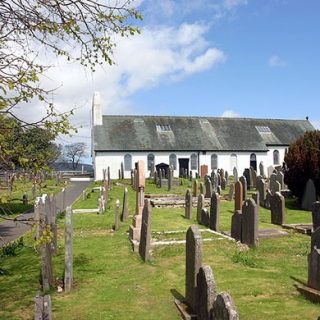
The Grade II listed listed of Church of St Mor and St Deiniol in Llanfor is no longer a place of worship and has been recently been advertised for sale. Built in 1875 on the site of a much older building, possibly the oldest church in Merioneth. It is possible that this older church was reputed to have been haunted. Read More »
Churchfield Wood, Turville
Churchfield Wood can be found North East of Turville Court and is thought to be haunted by Mary Blandy who was executed on 6 April 1752 for poisoning her father. Mary was known to have visited Turville Court, though not the current building which only dates from 1847. Read More »
Claydon House
The spirit of Sir Edmund Verney, standard bearer to Charles I, is said to appear at the house in times of national crisis.
Sir Edmund was killed at the battle of Edgehill, and is reputed to have sworn that no man would take the standard that he bore without cutting his hand from his body. Read More »
Cleopatra's Needle
Cleopatra's Needle is made of red granite and stands 68ft. It is one of three ‘Needles', the other two being in Paris and New York. Although named after Cleopatra they actually date from 1450BC and the reign of Thutmose III. The inscriptions date from roughly 1250BC and were probably added on the order of Ramesses II as they mention his great victories. Read More »
Clifton Hall
Clifton Hall is a Georgian style Grade I listed building and ancestral home of the Clifton family. The building recently attracted a reputation in the national media of being haunted after Anwar Rashid, the millionaire owner of Clifton Hall and his family fled the premises, apparently driven out by its ghosts. Read More »
Clifton Suspension Bridge
Spanning the Avon Gorge between Leigh Woods in Somerset and Clifton in Bristol (a distance of 214 meters), the Grade I listed Clifton Suspension Bridge has been an iconic landmark for nearly 150 years and although it was originally designed for horse drawn vehicles, today it carries 4 million cars each year. Read More »
Closeburn Castle
Many ancient families are associated with omens and signs that traditionally tell of death or illness in the family line. These omens range from radiant boys, banshees, phantom drummers and various animals. The Kirkpatrick family who inhabited Closeburn Castle have their own specially symbol of misfortune: that of a swan with a bloody breast, relating to an old family story. Read More »
Combe Sydenham
Combe Sydenham is associated with a legendary story concerning Sir Francis Drake, and another historical figure, George Sydenham, who has also become the subject of folklore. Read More »
Comlongon Castle
Many strange things are alleged to have happened here in modern times, with doors opening and closing, floorboards creaking and lights going on and off in empty rooms. Read More »
Compton Bridge
According to local legend, the bridge was haunted by the ghost of a man who met an unfortunate death here. During the 1920s a train travelling to Compton pulled to a halt with one of the carriages straddling the bridge. A male passenger stepped out of the door thinking the train had come to a halt at the platform, and fell to his death onto the road below. Read More »
Conwy Castle
Conwy castle and the city walls were built from the years 1283-1289 by approximately 1,500 workers at the height of the construction, to form one of King Edward I (17th June 1239 – 7th July 1307) fortresses in his ‘Ring of Castles’, used to quell the Welsh uprisings. English citizens were moved in to the town and the Welsh people were banned from living there. Read More »
Corby Castle
Corby Castle lies on the banks of the river Eden, not far from Carlisle. The castle was the seat of the Howard family and is haunted by a spirit known as the radiant boy who has been sighted infrequently. The apparition haunts a room in the oldest part of the castle, which is reached by a passage running through a wall. Read More »
Corfe Castle
The imposing ruin of Corfe Castle, which dates back to the Norman period, is said to be haunted by a headless woman. She has been seen standing by the castle walls and near the ruined gatehouse. Read More »
Corve Street, Ludlow
Once the site of a Grey Friars Priory with links to St Leonard's Church, this street now has the reputation of being haunted. A nurse called Evelyn Sheppard had a strange experience there in 1971. "In front of me was a refined-looking gentleman wearing the style of clothes associated with the caricature of John Bull. Read More »
Courtiers House
On 7 June 1799, twenty nine year old Mrs Sarah Fletcher committed suicide at Courtiers. She hung herself from the curtain rails of her four-poster bed using a handkerchief and a piece of cord. It is said that she was driven to take her own life after she discovered her husband, who was a Captain in the Royal Navy was arranging a bigamous marriage to a wealthy heiress. Read More »
Covent Garden Underground Railway Station
Covent Garden Station opened on 11 April 1907 and serves the Piccadilly Line. It is said to be haunted by the apparition of a tall man wearing white gloves, a top hat and a frock coat and grey suit. This figure has been reported many times since the 1950’s though recent sightings are uncommon. He has been seen in the tunnels and the staff rest room. Read More »
Cranbrook, Rose Bay, Australia
In Phantasms of the Living (vol. II) (Frank Podmore, F W H Myers and Edmund Gurney), there is an account of an apparition experienced and identified by multiple witnesses. It is given in a letter by Mr Charles A. W. Lett, a member of the Military and Royal Naval Club, dated December 3rd, 1885, concerning events that took place twelve years earlier. Read More »
Crathes Castle
This 16th Century tower house is haunted allegedly haunted by two ghosts, a Green Lady and another young woman. Read More »
Creslow Manor House
The 14th century manor house at Creslow which has links to the Royal household is one of Buckinghamshire’s oldest continually inhabited buildings and during the Victorian era it gained a reputation of having a room haunted by a phantom, skirt rustling woman. Read More »
Cuckfield Park
Cuckfield Park is a private Elizabethan house that was the seat of the Bowyer and then the Sergison family. It was the inspiration behind William Harrison Ainsworth’s (born 1805- died 1882) famous romance novel Rookwood and was said to be reputedly haunted by the ghost of Wicked Dame Sergison. Read More »
Culloden Battlefield
The moor - site of the last battle on British soil -has its share of ghostly traditions, perhaps befitting for the scene of so much bloodshed and slaughter. The Battle of Culloden - April 16th 1746 - marked the fall of the Jacobite rebellion of 1745, which sought to restore the Stuart monarchy to the throne. Read More »
Culzean Castle
Culzean Castle stands on the site of a 15th century Kennedy stronghold. The castle was completely redesigned by Robert Adam between 1777 and 1792, under the 10th Earl of Cassillis. Read More »
Curry Mallet
The Manor House (Mallet Court) was in the hands of the Mallet family for over 900 years until it was sold in the 1980's. Amongst its many visitors, the manor house can boast William the Conqueror, King John and Henry the II. The site was originally the site of a Saxon stronghold, and before that there may have been a Roman settlement there. Read More »
Cursed Bone of Learmonth Gardens
The home of Sir Alexander Hay Seton, 10th Baronet Seton (born 14 August 1904 – died 1963) became the focus of the world media after poltergeist like activity possibly linked to a bone taken from an Egyptian skeleton led to speculation that the Baronet’s family were cursed by a mummy. Read More »
Dartford Heath Civil War Ghost
An article about Dartford Heath on the Perception 9 website mentions the ghost of a horseman dating from the English Civil War that rides slowly from the East of Heath Lane towards Wilmington.