You are hereGiants
Giants
Machrie Moor Stone Circles
The Isle of Arran, off the West Coast of Scotland, has many stone circles and standing stones dating from the Neolithic period and the early Bronze Age. The finest collection of circles can be found on Machrie Moor, on the West of the island. The whole moorland is littered with the remains of early man, from hut circles to chambered cairns and solitary standing stones. Read More »
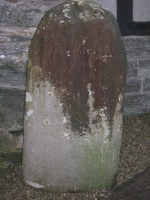
Maentwrog (Twrog’s Stone)
Lying in the Vale of Ffestiniog, alongside the river Dwyryd, is the village of Maentwrog. There is a legend that a giant called Twrog (who died in the year AD610) hurled a stone from a hill top, down into the village and destroyed a pagan altar. Read More »
The Six Hills, Stevenage
The six hills which occupy prominence in the town are tumuli or Round Barrows dating from the Bronze Age. According to legend the hills are spade fulls of earth taken from Whomerly wood and thrown at the town by a giant (or the Devil) intent on destruction. His last shot went well off mark and knocked the steeple off Gravely Church two miles away. Read More »
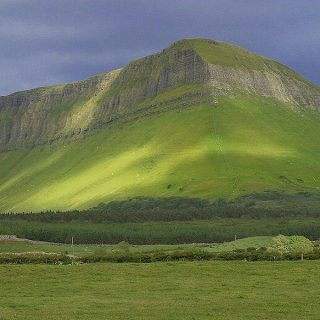
Snowdon
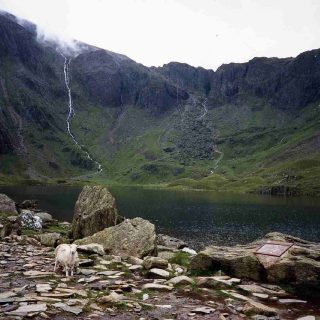
Standing 3650 ft above sea level, Snowdon is the highest peak in Wales, second highest mountain in Britain and is also probably the busiest due to it popularity with hillwalkers. Read More »
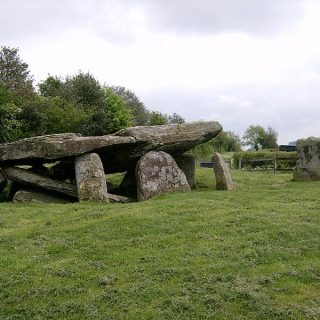
Spinsters Rock
Spinsters Rock is a burial cairn dating to the early Bronze Age. The structure was re-erected in the 1862 after collapsing earlier in the year.
According to folklore the rocks where erected by a group of three spinsters who where on a journey to deliver some wool. Obviously these three women where seen as giants having the strength to carry such a heavy burden. Read More »
St Michael's Mount
St Michael's Mount is a picturesque rocky island that has been described as the 'Jewel in Cornwall's crown' - perhaps a reason for its popularity with visitors. Read More »
Stokesay Castle
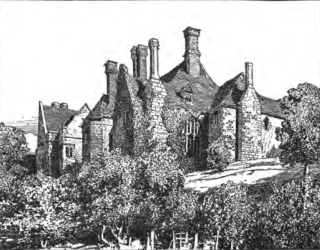
This thirteenth century fortified manor house is supposedly the hiding place of a treasure chest full of gold, which was hidden by two giants. The legend says the treasure is guarded by a raven which sits atop the chest. The key to the chest was apparently lost when one of the giants dropped it in the moat. Read More »
The Giants of Stokesay Castle
This legend belongs to the area around Stokesay Castle in Shropshire, and was first recorded in Shropshire Folklore, A Sheaf of Gleanings by Burne and Jackson London 1883. What follows is a short adaptation of the original folklore. Read More »
The Great Giant of Henllys
The original tale first appeared in The Athenaeum, published in 1847, and tells how a tyrannous figure became even more fearsome as a ghost after he had died. Three brave priests finally exorcise the ghost with a mix of magic and prayer. Read More »
Wade and his Wife
Wade and his wife were two giants, said to have lived in the area around Whitby in North Yorkshire. As part of the old race they both had the most tremendous powers, and could lift mountains and throw giant boulders like pebbles. Read More »
The Wrekin
This impressive hill sits in the middle of a rolling landscape and at 1,334 feet is an impressive landmark for miles around. The hill is crowned with the remains of an Iron age Hill fort and it is said that a beacon fire was lit on its summit during the Spanish Armada. Read More »
The Origin of The Wrekin
This is one of two folktales, which explain the origin of the Wrekin, a 1,334 foot high hill standing on the Shropshire plain. The hill has the remains of an Iron Age Hillfort on its summit, and folk evidence suggests it was an important focal point for our prehistoric ancestors. Read More »