You are hereWales
Wales
Miskin Manor Hotel
Miskin Manor is an AA 4 star, Grade II listed country hotel sited within twenty-five acres of gardens and grounds in the Vale of Glamorgan at Pontyclun. Read More »
Moel Faner Hillfort
With an entrance facing towards the north-east, this oval shaped hillfort is probably from the Iron Age. It lies at a height of 950 feet, on a promontory of a hill overlooking the Nannau estate and the Mawddach valley. The fort was small, being about 0.5 acres and the single wall enclosing the fort would have been about six feet high, but it is now quite trampled. Read More »
Moel Goedog Hillfort
In a commanding position situated on the hills above Harlech are the remains of the suspected late Bronze Age hillfort known as Moel Goedog. It is adjacent to the prehistoric track way of Fonlief Hir, which is indicated by a series of standing stones along the route. Read More »
Moel Goedog Stone 1
Moel Goedog 1 lies just of the track, close to Moel Goedog hillfort and the two Moel Goedog ring cairns, East and Read More »
Moel Goedog Stone 2
This standing stone is just beside the track, being about 60 metres from Moel Goedog 3 and near to the Moel Goedog hillfort. Read More »
Moel Goedog Stone 3
This standing stone is close to Moel Goedog hillfort, and it is about 60 metres from Moel Goedog 2. Read More »
Moel Goedog Stone 6 a.k.a. Fonlief Hir Stone E
Moel Goedog 6 is a wedged shaped standing stone that has a notch in its upper surface. It stands 0.8 metres high and is part of the Fonlief Hir ancient Track way.
Moel Goedog, East (Ring Cairn)
This is the remains of the easterly ring cairn (a Neolithic burial covered with stones); one of a pair situated close together in the Moel Goedog ancient monument complex situated the hills above Harlech close to Moel Goedog hillfort.
Moel Goedog, West (Ring Cairn)
This is the remains of the westerly ring cairn (a Neolithic burial covered with stones); one of a pair situated close together in the Moel Goedog ancient monument complex situated the hills above Harlech close to Moel Goedog hillfort.
Moel Offrwm (Lower Hillfort)
Being only 0.5 acres in area, and built on a small prominent rock, this fort did not have much room for a settlement, but due to its natural defences and its high wall, it would have been easy to defend. Evidence has been found for a single six metre diameter roundhouse within the fort, so it would only have housed a handful of people. Read More »
Moel Offrwm (Upper Hillfort)
Within the Nannau estate near Llanfachreth, there are three hillforts in quite close proximity, Moel Offrwm (Upper fort), Moel Offrwm (Lower fort) and Moel Faner. Read More »
Moel-y-Sensigl [a.k.a. Moel Goedog Stone 7 & Fonlief Hir Stone A]
This standing stone found close to Merthyr Farm, Harlech, is the tallest and most prominent of the five stones denoting the supposed prehistoric track way known as Fonlief Hir. The stone stands just over six feet tall and can be seen over a gate in the stone farm wall beside the road.
More Anglesey Ghosts by Bunty Austin
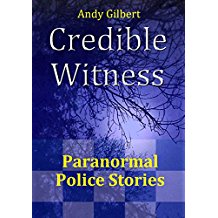
More Anglesey Ghosts is the follow up to Buty Austin's book, Haunted Anglesey, and touchingly dedicated to her late husband Walt. In this book Bunty has retuned to her favourite stomping ground and brings to her readers a new collection of ghostly sightings and paranormal encounters set to keep you up at night. Read More »
Mynydd y Fedw
In 'Celtic Folklore Welsh And Manx' (1901), John Rhys recounted the following folktale originally passed down Siân Dafydd of Helfa Fawr, and Mari Domos Siôn of Tyn Gadlas, Llanberis who would probably have been born around 1770. Read More »
Nansi Llwyd and the Dog of Darkness
The following folktale entitled ‘Nansi Llwyd and the Dog of Darkness’ appeared in ‘The Welsh Fairy Book’ (1908) by W. Jenkyn Thomas. NANSI LLWYD was walking in the dusk of the evening towards Aberystruth, and she was in a very bad temper, for she was longing to get married, and according to all the omens she never would. Read More »
Nant y Ffrith Phantom Army
The village of Bwlchgwyn is the highest in Wales and it was near here in the Nant y Ffrith Valley that a phantom army was reported in September 1602 by Robert Parry. Read More »
Nanteos Mansion
Nanteos means the valley of the nightingale, and is a Georgian mansion house built for Thomas Powell in 1739. Read More »
Ogaf Myrddin
Ogaf Myrddin means Merlin's Cave, and this is one of the locations where he is said to sleep awaiting his release. The cave is hidden behind a waterfall.
Directions: Northwest of Brechfa
Ogmore Castle
A ghostly White Lady is supposed to have killed a greedy treasure seeker in these ruins. On his first visit he had encountered the ghost and tried to speak to her for which he was rewarded a few coins from the treasure she guards. He made a return visit to alleviate her of the burden of looking after so much treasure, but was caught by the White Lady who scratched him. Read More »
Oystermouth Castle
Oystermouth Castle set in the Gower Peninsula was first built in 1106 by William de Londres of Ogmore Castle. In 1116 the Welsh rove him out and burnt the castle down. It was destroyed again by the Welsh in 1137 after being rebuilt. The Gower Lordship was given to John de Braose who also owned Swansea Castle after the area had become more stabilized by 1220. Read More »
Pen Dinas Hill Fort, Great Orme
There was once an Iron Age hill fort at this area called Pen Dinas on the Great Orme. Archaeologists have identified the remains of more than fifty hut circles and some degraded defensive ramparts. Pen Dinas is subsidiary peak that juts out of the Great Orme, and it is a good defensive location for a settlement. Read More »
Pen Llystyn Roman Fort
There used to be a Roman military settlement just north of where the old Roman road changes direction at Bryncir, (the now A487 was once the Roman military road between the forts at Caernarfon (Segontium) and Trawsfynyedd (Heriri Mons, a.k.a. Read More »
Pen-y-Dinas Hillfort
The remains of the prehistoric, Iron Age, Pen-y-Dinas hillfort stand on a prominent peak (230 metres high), overlooking the coastal plain of Dyffryn Ardudwy. Its shape is oval, following the shape of the hill that it stands upon, and it measures approximately 60 metres by 50 metres. The wall of the hillfort is better preserved on the west side, which is where the entrance to the fort used to be. Read More »
Pen-y-Gaer Hill Fort
A Bronze Age hill fort can be found on the summit of Pen-y-Gaer, close to the village of Llanbedr-y-Cennin to the south of Conwy. The fort had quite complex defences, including three ramparts in places, and some short standing stones (a sort of chevaux de frise) to act as obstacles to both cavalry and infantry. Read More »
Penmon and Saint Seiriol
Penmon is a parish found on the south-east tip of Ynys Môn (the Isle of Anglesey). Things to see here include Penmon Priory, Saint Seiriol’s Church, Saint Seiriol’s Well, a dovecote and the Penmon crosses. Read More »