You are hereFolklore / Fairies / Welsh Fairies

Welsh Fairies


Fairy Midwife Of Beddgelert sticky icon

In 1891 the following folk tale appeared in 'The Science of Fairy Tales; An Enquiry Into Fairy Mythology' by Edwin Sidney Hartland. It is one of a number of stories in which human midwives are needed at fairy births. Read More »

Llyn Barfog (The Bearded Lake) sticky icon

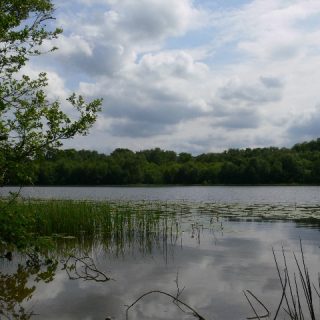
Llyn Barfog is situated in high countryside above the northern banks of the River Dyfi. The lake is isolated, small, and covered with yellow water lilies in the summer. Sir John Rhys in Celtic Folklore suggests that it was originally called Llyn-y-Barfog (The Bearded One’s Lake) referring to some ancient mythical being who would have lived there. Read More »

A Man Carried Through The Air By The Fairies

The following folk tale by Edward Hamer appeared in a publication entitled 'Parochial Account of Llanidloes' (1877) and repeated in Elias Owen's 'Welsh Folklore' (1973). Read More »

A Visit to Fairyland

Llyn Cwellyn

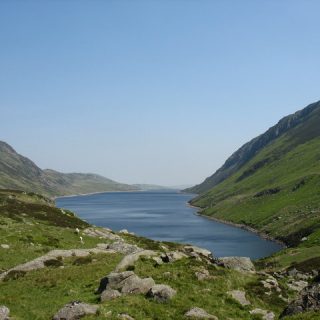
The following fairy folk tale takes place around Llyn Cwellyn, a 215 acre, 120 feet deep glacial lake which has now been dammed to create a reservoir. The tale is taken 'Bedd Gelert: Its Facts, Fairies, and Folk-Lore (1899) by D E Jenkins. Read More »

Bendith y Mamau

Bendith Y Mamau means 'the mothers blessing' and is a generic name for the fairies, especially in Southern Wales.

In appearance the fairies are described as small and ugly, and are most readily identified with the Brownies, or the West Country Pixies, although they have the characterisations of most fairies. Read More »

Ellylldan

A Welsh spirit similar to the English Will o' the Wisp, it appears as a light and misleads travellers from their path.

Along with black dogs, tales of fairy lights are common throughout Britain, with a different name given to a similar phenomena. In general they are seen as malevolent, guiding lone travellers into treacherous bogs. Read More »

Fairies of Llyn Dwythwch

Children were often warned in the past about the dangers of fairies and John Rhys in his 'Celtic Folklore Welsh And Manx' (1901) vouched for an account from a lady who grew up in Cwm Brwynog thirty to forty years earlier. Read More »

Fairy Gold Of Cwmglas Hollow

Cwm glas hollow

According to John Rhys in his 'Celtic Folklore Welsh And Manx' [1901] 'The following is a later tale, which Mr. Thomas Davies heard from his mother, who died in 1832:--'When she was a girl, living at Yr Hafod, Llanberis, there was a girl of her age being brought up at Cwmglas in the same parish. Read More »

Freni-Fawr

This mountain has long been associated with the fairies and is traditionally an entrance to the other world.

Directions: To the West of Crymych

Gwrach-y-rhybin

A hideous hag who haunts Welsh families, and is also associated with specific places. Read More »

Llyn Du'r Arddu

In 'Celtic Folklore Welsh And Manx' (1901) John Rhys describes the following tale he was told concerning a fairy bride in the summer of 1881. ‘An old woman, called Siân Dafydd, lived at Helfa Fawr, in the dingle called Cwm. Brwynog, along the left side of which you ascend as you go to the top of Snowdon, from the village of lower Llanberis, or Coed y Ddol, as it is there called. Read More »

Llyn Y Fan Fach

Traditionally the lake is thought to have been bottomless, and it has long been associated with fairies. Read More »

Llyn y Forwyn

The following tale of Llyn y Forwyn (Damsel’s Pool) appeared in ‘Celtic Folklore Welsh And Manx’ (1901) by John Rhys and was in turn a translation of a Welsh language version featured in Elfed and Cadrawd’s ‘Cyfaill yr Aelwyd a'r Frythones’ (1892). Read More »

Mermaids

Mermaid

Tales of mermaids have been around for centuries, and form a large part of seafaring lore, especially round the coastal areas of Britain such as Cornwall, and the Northern Isles of Scotland. Their sighting was thought to be a bad omen, foretelling storms and rough seas. There are numerous folk tales describing their interaction with humans. Read More »

Pentre Ifan

Pentre Ifan

This is one of the most recognisable chambered cairns in Wales, with a huge capstone supported by the points of 3 upright stones. Read More »

River Honddu Water Horse

The River Honddu (Afon Honddu) runs through the Black Mountains in the Brecon Beacons starting at the Vale of Ewyas and said, according to folklore, to be the home of a small grey Ceffyl-dwr (a welsh water horse similar to a Kelpie). Read More »

Strange Lands By Andrew L Paciorek

Strange Lands

Andy Paciorek is one of Mysterious Britain & Irelands favourite contributors and his amazing artwork can be found illustrating articles throughout this site. Read More »

The Coblynau

The Welsh version of the Cornish Knockers, these mine spirits were relatively good humoured, and helped the miners by knocking in places with rich lodes of mineral, or metal. The Coblynau dressed in miners' attire, and stood at around 18 inches in height. Read More »

The Cwn Annwn

The Cwn Annwn, which means hounds of the otherworld (underworld), are Welsh phantom dogs seen as a death portent. Their growling is louder when they are at a distance, and as they draw near the growling grows softer and softer. Read More »

Tylwyth Teg

Tylwyth Teg is a general name for the fairies in Wales, it means the 'fair folk'. Like the Bendith y Mamau the flattering name was thought to appease them. Read More »

Tylwyth Teg of Llyn Cwellyn

In 'Celtic Folklore Welsh And Manx' (1901) John Rhys mentioned a story concerning fairies that had been passed to him by two brothers who had in turn heard it from Mari Domos Siôn, who died around 1850. 'A shepherd had once lost his way in the mist on the mountain on the land of Caeau Gwynion, towards Cwellyn Lake, and got into a ring where the Tylwyth Teg* were dancing: it was only af Read More »

Will o' the Wisp

Will o' the Wisp

The Will o' the Wisp is the most common name given to the mysterious lights that were said to lead travellers from the well-trodden paths into treacherous marshes. The tradition exists with slight variation throughout Britain, the lights often bearing a regional name. Read More »

Yr Ogaf Ddu (The Black Cave), Near Criccieth

This cave is associated with a legend common in Britain, that of pipers disappearing into the fairy realm.

Four pipers went into this cave to commune with the fairies, but they never returned. Their piping can still be heard when the air is quiet.


Share/Save

Navigation

Recent comments

Book Review

Haunted Weymouth by Alex Woodward

Haunted Weymouth

Welcome to Weymouth, location for the London 2012 Olympic sailing competitions and home to it's fair share of ghosts and paranormal activity - which I think should add to the attraction! Alex Woodward has written the latest book in the Haunted series published by The History Press, Haunted Weymouth, which takes us on another spine-chilling journey around the town and local area. Read More »

Featured Site