Author: Ian

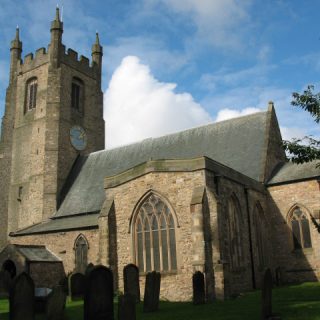
Church of St Edmund, Sedgefield

The Church of St Edmundthe Bishop at Sedgefield is a Grade I listed building dating from the 13thcentury. This church is associated with the story of the ‘Pickled Parson’. The following account of the story is extracted from ‘Legends Superstitions of the County of Durham’ by William Brockie (1886). ‘The Rev.
Frensham Common Round Barrows

There is a group of four Round Barrows on Frensham Common. Three are clustered close to each other and the fourth is found roughly 150 meters to the north of them.

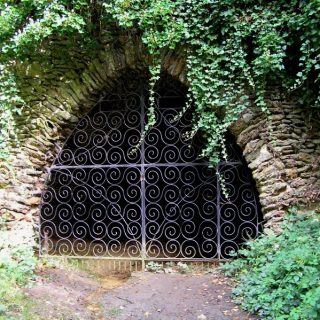
Mother Ludlam’s Cave

Mother Ludham’s Cave, was so named after the White Witch that was said to live in it. This small sandstone cave can be found in the Wey Valley and is also associated with the ruined Cistercian Waverley Abbey, or more correctly the spring inside it is associated with the monks that lived there. This spring was known as Ludwell and later St Mary’s Well.

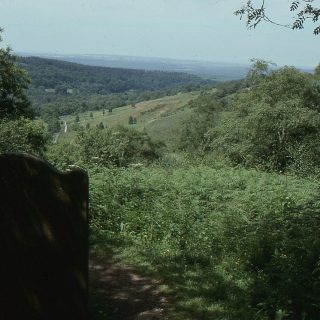
Devil’s Punch Bowl, Hindhead

The Devil’s Punch Bowl at Hindhead is a large natural hollow with several pieces of folk lore attached to Old Nick himself.

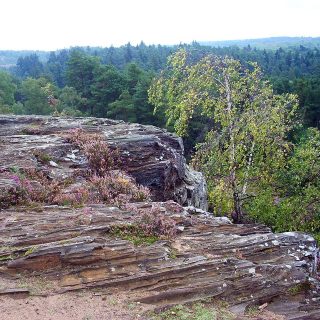
Osebury Rock

Osebury Rock (or Rosebury Rock) is a remarkable cliff with dense woodland on the River Teme which, according to Edwin Hartland in his ‘English Fairy and Other Folk Tales’ (1890), has an association with fairies.

A Myth of Middridge

The following story entitled ‘A Myth of Midridge’ was published in ‘English Fairy and Other Folk Tales’ (1890) by Edwin Sidney Hartland. ‘TALKING about fairies the other day to a nearly octogenarian female neighbour, I asked, Had she ever seen one in her youthful days?

Yan Di – The First Chinese Emperor

The legendary Yan Di or "Flame Emperor" is said to have ruled a stone age tribe around the area of Yang Tou Shan (Sheep’s Head Mountain) just north of Baoji in Shaanxi province, China. There are few facts known about Yan Di as historical records do not exist from the time he supposedly lived.

Devil’s Jumps

Three small hills near Churt have been known as the Devils Jumps (or the Devils Three Jumps) since at least 1765. The highest of the three hills is known as Stony Jump. There are a few folk tales attached to these hills which explains their name.

Tom Dula (Dooley)

"Hang down your head Tom Dooley,
Hang down your head and cry,
Hang down your head Tom Dooley,
Poor boy, you’re bound to die!"