Category: Folktales

Fairy Nurse

There lived a woman in Innish Shark — one of the group of islands on the eastern coast — named Biddy Mannion, as handsome and likely a fisherman’s wife as you would meet in a day’s walk. She was tall, and fair in the face, with skin like an egg, and hair that might vie with the gloss of the raven’s wing.
Troll Labor

Thomas Keightley in his The Fairy Mythology, Illustrative of the Romance and Superstition of Various Countries (1850) gives the following account which was narrated in the form of a legal declaration.

Wild Edric’s Wife

In ‘The Science of Fairy Tales’ (1891), Edwin Sidney Hartland recounts the following tale told by the medieval writer Walter Map (Born 1140- Died c. 1208–1210). ‘Wild Edric*, of whose historic reality as one of the English rebels against William the Conqueror there is ample proof.

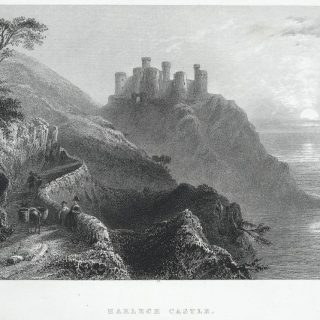
Harlech and ‘The Mabinogion’

Much of the Mabinogion saga is based in the Ardudwy region of North Wales. It was from the ‘Castle Rock’ or ‘Rock of Harlech’ (where Harlech Castle now stands) that the Welsh King Bendigeidfran first saw the Irish longboats of Matholwch loom into view with their shields turned upside down as a sign of peace.

The Lapland Clergyman’s Wife who was Midwife to a Troll

According to ‘The Science of Fairy Tales’ (1891) by Edwin Sidney Hartland ‘A clergyman’s wife in Swedish Lappmark, the cleverest midwife in all Sweden, was summoned one fine summer’s evening to attend a mysterious being of Troll race and great might, called Vitra. At this unusual call she took counsel with her husband, who, however, deemed it best for her to go.

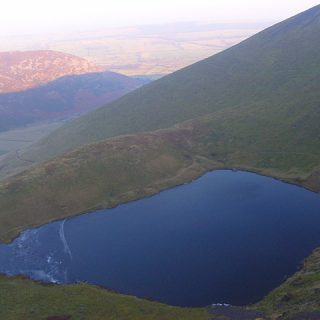
Bowscale Tarn

Bowscale Tarn is 56 feet deep and during the Victorian era was popular with tourists. According to folklore two immortal fish live in this corrie tarn and depending upon which version of the story you read, they may, or may not have the ability to talk.

The Smuggler’s Leap

"Near this hamlet (Acol) is a long-disused chalk pit…known by the name of ‘The Smuggler’s Leap.’ The tradition of the parish runs that a riding officer from Sandwich, called Anthony Gill, lost his life here…while in pursuit of a smuggler. A fog coming on, both parties went over the precipice…The spot has, of course, been haunted ever since". [Lewis’s History of Thanet, by the Rev.

Kentish Longtails

The inhabitants of Strood in Kent were once nicknamed Kentish Longtails. Though this could relate to the belief in medieval mainland Europe that the English had tails, there is a folk tale relating a curse placed on the people of Strood by Thomas Becket, Archbishop of Canterbury.

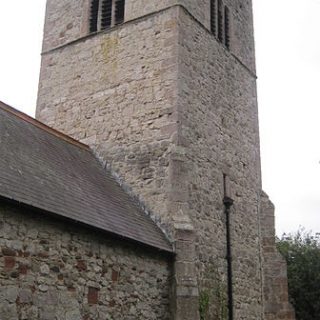
St Cynfarch and St Mary Church, Llanfair Dyffryn Clwyd

According to Elias Owen in his ‘Welsh folk-lore: a collection of the folk-tales and legends of North Wales’ (1887) ‘For the following legend, I am indebted to Mr. R. Prys Jones, who resided for several years in the parish of Llanfair Dyffryn Clwyd. In answer to a letter from me respecting mysterious removal of churches, Mr.