All Saints Church, Bristol
All Saints Church is a Grade II listed building with parts dating back to 12th century. Before the dissolution, All Saints was associated with the society of the Kalendaries, who built a public library here.
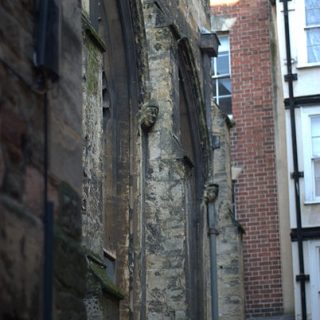
All Saints Church is a Grade II listed building with parts dating back to 12th century. Before the dissolution, All Saints was associated with the society of the Kalendaries, who built a public library here.

St Thomas’s Regent Street is now demolished and the parish amalgamated with those of St Peter’s, Great Windmill Street and the St Anne’s Church, Soho. The church received the following mention by Elliott O’Donnell (27 February 1872 – 8 May 1965) in his Haunted Churches (1939).
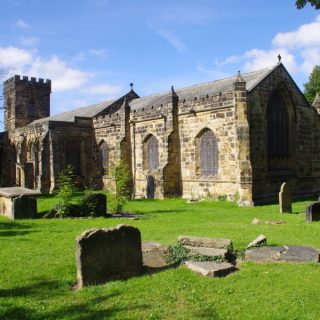
The church of St. Nicholas is a Grade II listed building dating from the 15th or 16th century, though it was extensively rebuilt or restored in the 18th century and early 20th century. Joining the church to the South are the ruins of Guisborough Priory which was dedicated to St Mary.
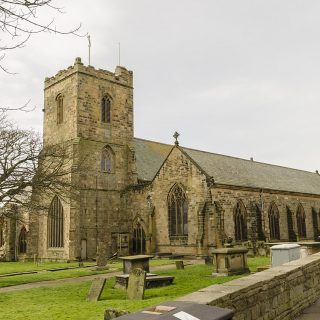
St Mary’s Church is a Grade I listed building dating from the 12th century, though much of it was rebuilt in the 17th century after it was damaged during the siege ofScarborough Castle during the English Civil War in 1644. In ‘Haunted Churches’ (1939), Elliott O’Donnell (27 February 1872 – 8 May 1965) refers to a woman keeping vigil at St Mary’s on St Mark’s Eve.
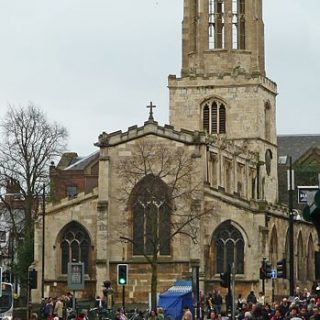
The 14th century All Saints’ Church is a Grade I listed building. According to ‘Haunted Churches’ (1939) by Elliott O’Donnell (27 February 1872 – 8 May 1965) ‘All sorts of queer stories are told, too, of the other Pavement church, All Saints.
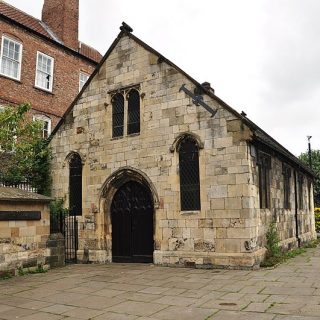
The 15th century St Crux Church was demolished in 1887 and some of its stone was then used to build St Crux Parish Hall. Writing in 1939, Elliott O’Donnell (27 February 1872 – 8 May 1965) mentioned the following ghostly traditions associated with St Crux in his ‘Haunted Churches’. ‘All kinds of stories have at various times been circulated regarding ghostly happenings at St.

Apparitions / Hauntings / Witchcraft
by Ian · Published February 9, 2016 · Last modified December 29, 2018
The following article by Sam Balls was published in the Essex Chronicle, 1 February 2016. It is entitled ‘Britain’s most haunted house and former medieval prison is up for sale in Essex for £180,000’
Ghost hunters can snap up Britain’s most haunted house after the Essex-based creepy cottage was put on the market for £180,000.
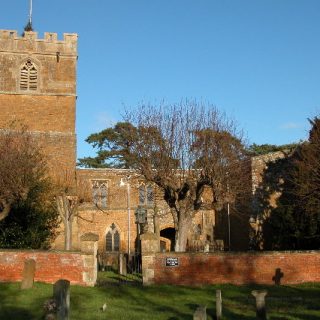
In ‘Haunted Churches’ (1939), Elliott O’Donnell (27 February 1872 – 8 May 1965) gives the following brief description of a haunting at the 12th century parish church of St Mary the Virgin. ‘THE parish church of Ilmington in Warwickshire was, and some say still, at times, is, haunted by the ghost of a parish clerk who died in 1793.
Apparitions / Hauntings / Road Ghosts
by Ian · Published January 27, 2016 · Last modified December 15, 2018
The following extract is taken from ‘Notes on the Folk-lore of the Northern Counties of England and the Borders by William Henderson’ (1879). ‘The Headless Coach, or more correctly coach with headless coachman, appears again in Norfolk. Mr.
In his ‘Memorials, or the memorable things that fell out within this island of Britain from 1638 – 1684’ (Published 1818), Robert Law quotes the diary of Jacob Bee of Durham, who refers to a strange experience that was deemed a portent of death. “John Borrow departed this life the 17th day of January being Satterday this yeare 1684 and twas reported y’he see a coa
More
Necessary cookies are absolutely essential for the website to function properly. This category only includes cookies that ensures basic functionalities and security features of the website. These cookies do not store any personal information.
Any cookies that may not be particularly necessary for the website to function and is used specifically to collect user personal data via analytics, ads, other embedded contents are termed as non-necessary cookies. It is mandatory to procure user consent prior to running these cookies on your website.
Recent Comments