Trinity is a mansion house district in Edinburgh that developed in the early 1800’s and was named after Trinity House in Leith. There was a suspected case of poltergeist activity in a house in Trinity around 1835 which led to a legal battle between the supposedly haunted Captain Molesworth and his neighbour and landlord, Mr Webster.
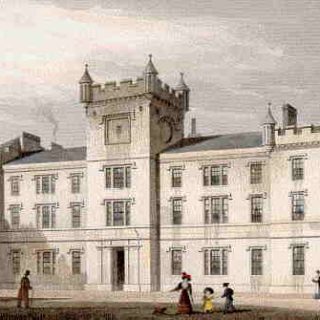
In 1798 the Wrichtishousis (Wrychtishousis or Wrightshouses) mansion was bought and subsequently demolished in 1800 to make way for a hospital and school, the legacy of the merchant James Gillespie (born 1726 – died 1797).
The following account of the tale of Lukki Minnie appeared in Malachy Tallack’s blog on the New Stateman website (30 April 2007). ‘For centuries – perhaps even for millennia, no-one is entirely sure – Shetland has been home to a very special creature.
In the following tale which appeared in ‘Some Folk-Tales and Legends of Shetland (1920)’ by John Nicolson, the ‘elements’ referred to are the bread and wine of the Eucharist and I suppose it is supposed to show the reputed strength of Christianity over pagan fairy magic.
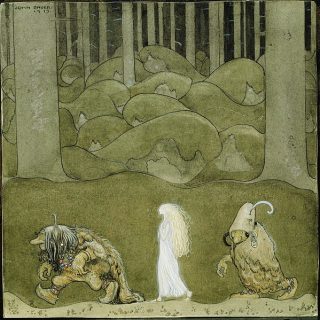
A Trow is a fairy creature from the folklore of Shetland and Orkney, similar to the mainlands elf, troll or goblin. It is said these musical and mischevious folk could be found living under the earth in mounds as well as in the sea surrounding the Shetland and Orkney.
According to Lord Archibald Campbell in his ‘Waifs and Strays of Celtic Tradition, Argyllshire Series, vol. 1 (1889); There is a green hill above Kintraw, known as the Fairies’ Hill, of which the following story is told.
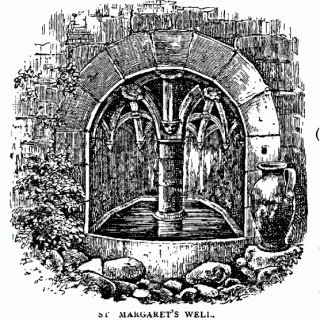
During the 1860 St Margaret’s Well was moved to its present location from the crossroads between Holyrood and Restalrig. It was described in 1852 as ‘a spring well, enclosed by an ancient vault over which part of the railway workshops had been built.’
There is a mermaid story associated with the small fishing village of Port Henderson which was recounted by John H Dixon in Guide to Gairloch and Loch Maree (1886). According to Dixon ‘Roderick Mackenzie, the elderly and much respected boatbuilder at Port Henderson, when a young man, went one day to a rocky part of the shore there.
The Brahan Seer is undoubtedly the most famous of all Celtic seers although the reality of the 17th Century Coinneach Odhar Fiosaiche or Kenneth Mackenzie is hidden deep in legend. The roots of these legends may have come from a holy man in the 1600’s, about whom legends have grown with the years.
Our Mysterious Britain & Ireland site uses cookies to improve your experience. We assume you are ok with this, but you can opt-out if you wish. AcceptRead More
Privacy & Cookies Policy
Privacy Overview
This website uses cookies to improve your experience while you navigate through the website. Out of these cookies, the cookies that are categorized as necessary are stored on your browser as they are essential for the working of basic functionalities of the website. We also use third-party cookies that help us analyze and understand how you use this website. These cookies will be stored in your browser only with your consent. You also have the option to opt-out of these cookies. But opting out of some of these cookies may have an effect on your browsing experience.
Necessary cookies are absolutely essential for the website to function properly. This category only includes cookies that ensures basic functionalities and security features of the website. These cookies do not store any personal information.
Any cookies that may not be particularly necessary for the website to function and is used specifically to collect user personal data via analytics, ads, other embedded contents are termed as non-necessary cookies. It is mandatory to procure user consent prior to running these cookies on your website.
Recent Comments