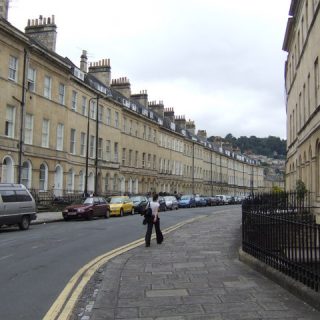
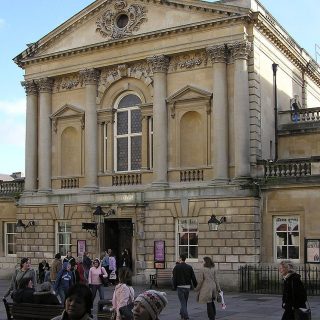
John Ingram in his ‘The Haunted Homes and Family Traditions of Great Britain’ (1897) gives the following description of a haunting realated to a murder in Henrietta Street. ‘Other tales, more or less circumstantial, have been related to us of houses in Bath, including one in Henrietta Street, Great Pulteney Street.
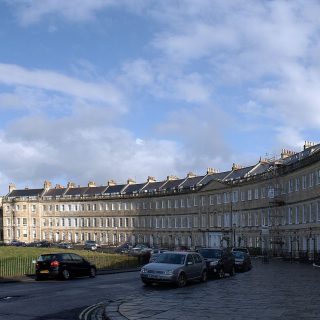
Designed by John Palmer (Born 1738 – Died 19 July 1817), Lansdown Crescent is great example of Georgian architecture. Made up of twenty houses built between 1789 and 1793, Lansdown Crescent is Grade I. In 1897, John Ingram mentioned the following haunting in his ‘The Haunted Homes and Family Traditions of Great Britain’.
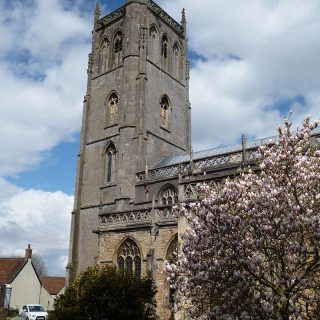
The following article entitled ‘The Glory of Banwell Church’, edited by Jill Bailey, was originally published on 28 September 1963 and republished in the The Weston Mercury on 23 May 2008.
According to ‘They Still Serve: A Complete Guide to the Military Ghosts of Britain’ by Richard McKenzie ‘Tradition States that the naked ghost of a Roman soldier has been seen running around the centre of the town. It is said that a police officer once gave chase to the phantom streaker only to watch it fade into nothing.
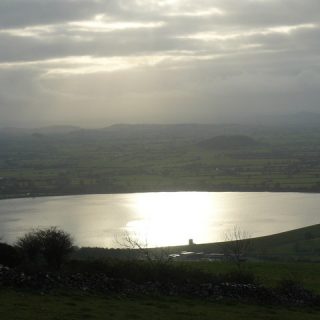
Shute Shelve Hill stands at 764ft overlooking the town of Axbridge. In the 17th century Shute Shelve was used as a site of public execution and is thought to be haunted a woman and two men that were hanged there for the murder of the womans husband.
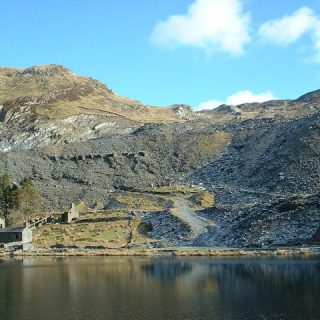
The disused Cwmorthin Slate Quarry can be found on the shore of Llyn Cwmorthin above Blaenau Ffestiniog. The following description of a strange experience was e-mailed into Mysterious Britain early in 2013 and I would be very interested to hear from anybody who could add more. “Start from Blaenau Ffestiniog.
Three Cistercian monks were murdered by the inhabitants of Accrington in the late 13th century and according to tradition a local haunting dates back to this time. ‘A History of the County of Lancaster: Volume 6’ (1911) gives the following information about the historical events.
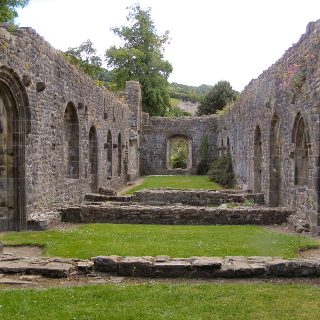
In 1296, Cistercian monks moved from Stanlow Abbey and founded Whalley Abbey, with the first stone being laid by Henry de Lacy, 3rd Earl of Lincoln, Baron of Pontefract, 10th Baron of Halton, Lord of Denbigh and 7th Lord of Bowland (Born 1251 – Died February 1311). Following the dissolution of the monasteries, Whalley Abbey was closed in 1537 and now stands in ruins.
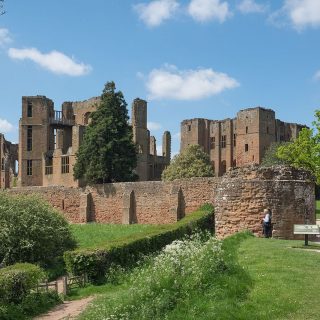
Dating from around 1120, Kenilworth Castle has been described as "the finest surviving example of a semi-royal palace of the later middle ages, significant for its scale, form and quality of workmanship”. It may also be significant for its number of reputed ghosts.
Our Mysterious Britain & Ireland site uses cookies to improve your experience. We assume you are ok with this, but you can opt-out if you wish. AcceptRead More
Privacy & Cookies Policy
Privacy Overview
This website uses cookies to improve your experience while you navigate through the website. Out of these cookies, the cookies that are categorized as necessary are stored on your browser as they are essential for the working of basic functionalities of the website. We also use third-party cookies that help us analyze and understand how you use this website. These cookies will be stored in your browser only with your consent. You also have the option to opt-out of these cookies. But opting out of some of these cookies may have an effect on your browsing experience.
Necessary cookies are absolutely essential for the website to function properly. This category only includes cookies that ensures basic functionalities and security features of the website. These cookies do not store any personal information.
Any cookies that may not be particularly necessary for the website to function and is used specifically to collect user personal data via analytics, ads, other embedded contents are termed as non-necessary cookies. It is mandatory to procure user consent prior to running these cookies on your website.
Recent Comments