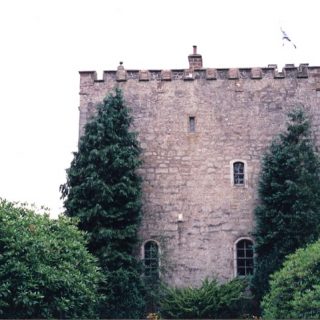
Closeburn Castle, A Kirkpatrick Family Legend
‘In the family of Kirkpatrick of Closeburn the tradition was, that when a death was about to take place in the family a swan invariably made its appearance on the loch that surrounded the...
‘In the family of Kirkpatrick of Closeburn the tradition was, that when a death was about to take place in the family a swan invariably made its appearance on the loch that surrounded the...
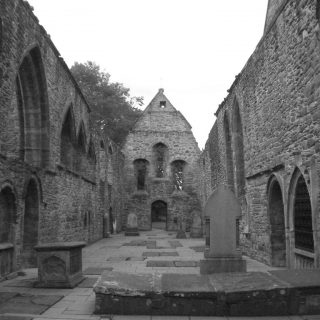
A common story in the Highlands is recounted here by John Gregorson Campbell in his 1902 book ‘Witchcraft & Second Sight in the Highlands & Islands’. ‘In the big church of Beauly (Eaglais mhor...
Folklore / Folktales / Scottish Folktales
by Ian · Published January 6, 2020 · Last modified January 13, 2020
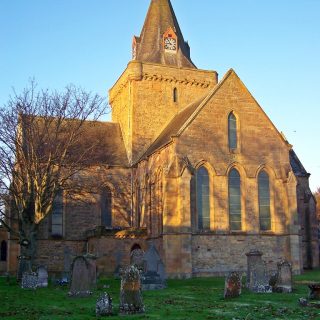
Dating from the13th century, the parish church in Dornoch is a Cathedral in name only and was historically the seat for the Bishop of Caithness until the 17th century. In his book The Peat-fire...
Folklore / Folktales / Scottish Folktales
by Ian · Published March 9, 2019 · Last modified March 9, 2021
A ruined church called Kirkmaiden-in-Fernis which can be found by Lag Point near Monreith, has an associated legend regarding the Myrton family and the foretelling of death. [Witchcraft and Superstitious Record in the South-Western...
Apparitions / Folklore / Folktales / Hauntings / Scottish Folktales
by Ian · Published January 15, 2016 · Last modified December 16, 2018
The following story was published in ‘Notes on the Folk-lore of the Northern Counties of England and the Borders by William Henderson’ (1879). ‘About half-a mile to the east of Maxton, a small rivulet runs across the turnpike-road, at a spot called Bow-brig-syke.
Folklore / Folktales / Scottish Folktales / Witchcraft
by Ian · Published January 15, 2016 · Last modified December 29, 2018
The following was published in ‘Scottish Fairy and Folk Tales’ by George Douglas (1901) but he cites ‘Folk-lore of the Northern Counties’by William Henderson’ (1879).’THE Laird Harry Gilles of Littledean was extremely fond of hunting.
Folklore / Folktales / Scottish Folktales
by Ian · Published January 15, 2016 · Last modified December 31, 2018
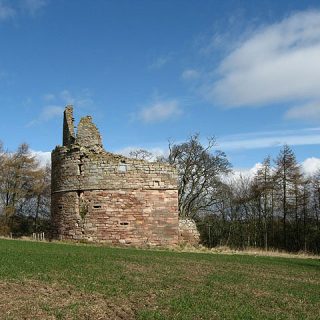
The 15th century Littledean Tower is now a ruin, but this fortified house was the home of the Kers of Littledean. The following story about Littledean was published in ‘Notes on the Folk-lore of the Northern Counties of England and the Borders by William Henderson’ (1879).
Folklore / Folktales / Scottish Folktales
by Ian · Published March 22, 2015 · Last modified January 11, 2019
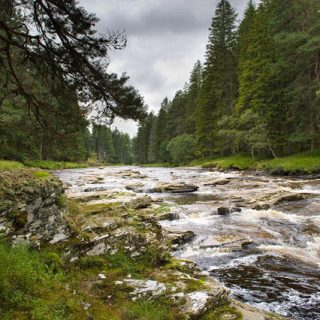
According to an article by W Gregor in Folklore [A Quarterly Review Of Myth, Tradition, Institution & Custom] Vol III (1892). ‘At one time there lived near the Linn of Dee, in Mar Forest, a man named Farquharson-na-cat, i.e., Farquharson of the wand. He got this name from the fact that his trade was that of making baskets, sculls, etc.
Fairies / Folklore / Folktales / Scottish Fairies / Scottish Folktales
by Ian · Published March 14, 2015 · Last modified November 19, 2018
The following extract is taken from Folklore [A Quarterly Review of Myth, Tradition, Institution & Custom] Vol III (1892). ‘This is a small loch on the side of the old military* road between Gorgarff and Tomintoul. The road passes close by its brink on the west side. On the other side of the road is an almost perpendicular rock, between 400 and 500 feet high.
Ancient Sites / Folklore / Folktales / Scottish Folktales / Wells
by Ian · Published March 14, 2015 · Last modified November 19, 2018
The following description is taken from Folklore [A Quarterly Review of Myth, Tradition, Institution & Custom] Vol III (1892). ‘This is a fine well, dedicated to St. Machar, near the present farm of Corriehoul, Corgarff, Strathdon. A Roman Catholic chapel was at one time near it, and the present graveyard occupies the site of the chapel.
More
Recent Comments