Category: Apparitions

Hynd Brook House

According to John Fahey in an Accrington Observer article entitled ‘Spooky tales of a haunted Hyndburn’ (30 October 2003). ‘Sue Brown, manager at Hyndbrook House sheltered accommodation in Dale Street, Accrington, claims residents often see a spectre of a man dressed in a brown suit.
19 Bennett Street, Bath

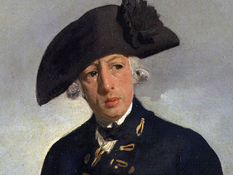
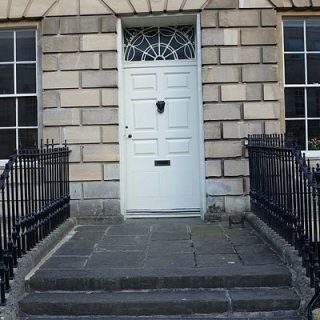
Admiral Arthur Phillip, the First Governor of Australia lived at 19 Bennett Street in Bath from 1806 and died here in 1814. The Dictionary of National Biography gives th efollowing account of his life and career. ‘PHILLIP, ARTHUR (1738–1814), vice-admiral and first governor of New South Wales, was born in the parish of Allhallows, Bread Street, London, on 11 Oct. 1738.

71 Great Pulteney Street, Bath

The plaque outside 71 Great Pulteney Street reads ‘Admiral Earl Howe K.G. lived here in 1794, 1795 & 1798. B. 1725 d. 1799’ and according to some sources his apparition was seen during the 1970’s in his uniform.

Mansfield Street, Glasgow

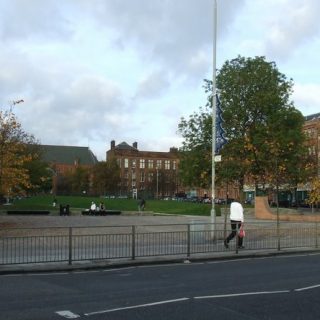
The following article entitled ‘Ghost is no joke for the Hanlons’ was published in the Glasgow Evening Times on 7 August 1961.

“We’ll never go near it again”

A shaken, sleepless man sat resting in his mother’s home to-day while six miles away a whole street argued furiously about the ghost he left behind him.

Naked Ghost

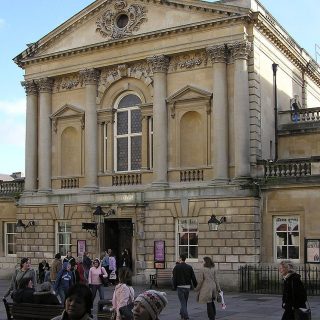
According to ‘They Still Serve: A Complete Guide to the Military Ghosts of Britain’ by Richard McKenzie ‘Tradition States that the naked ghost of a Roman soldier has been seen running around the centre of the town. It is said that a police officer once gave chase to the phantom streaker only to watch it fade into nothing.

Black Abbey, Accrington

Three Cistercian monks were murdered by the inhabitants of Accrington in the late 13th century and according to tradition a local haunting dates back to this time. ‘A History of the County of Lancaster: Volume 6’ (1911) gives the following information about the historical events.

Whalley Abbey

In 1296, Cistercian monks moved from Stanlow Abbey and founded Whalley Abbey, with the first stone being laid by Henry de Lacy, 3rd Earl of Lincoln, Baron of Pontefract, 10th Baron of Halton, Lord of Denbigh and 7th Lord of Bowland (Born 1251 – Died February 1311). Following the dissolution of the monasteries, Whalley Abbey was closed in 1537 and now stands in ruins.

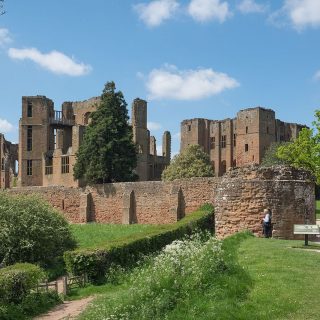
Kenilworth Castle

Dating from around 1120, Kenilworth Castle has been described as "the finest surviving example of a semi-royal palace of the later middle ages, significant for its scale, form and quality of workmanship”. It may also be significant for its number of reputed ghosts.