Crathes Castle
This 16th Century tower house is haunted allegedly haunted by two ghosts, a Green Lady and another young woman.

Anniversary Ghosts / Apparitions / Green Ladies / Hauntings
by Ian · Published August 12, 2008 · Last modified November 4, 2018
This 16th Century tower house is haunted allegedly haunted by two ghosts, a Green Lady and another young woman.
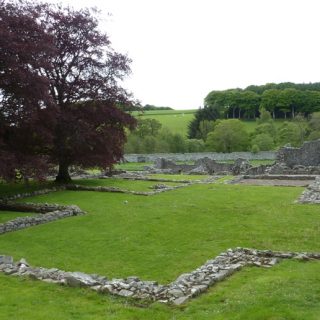
Deer Abbey dedicated to the Blessed Virgin Mary was a Cistercian House founded in 1219 by the Earl of Buchan, William Comyn which replaced an earlier Celtic monastery in the vicinity was dedicated to
Apparitions / Haunted Battlefields / Hauntings
by Ian · Published August 12, 2008 · Last modified January 11, 2019
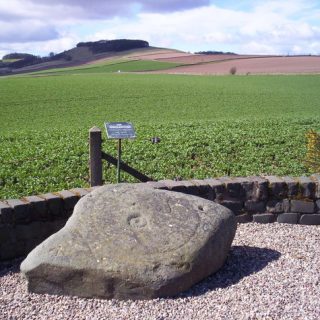
This is the site of the Battle of Nechtansmere found between the Picts and the invading Northumbrians of King Ecgfrith. The battle took place at 3.00pm on 2 March 685AD. The Picts had been subjugated under Drust, a puppet King supported by King Oswui of Northumberland. When Oswui died in 672AD the Picts (called Picti ‘painted ones’ by the Romans) overthrew Drust.
Apparitions / Buried Treasure / Hauntings / Legends
by Ian · Published August 12, 2008 · Last modified December 29, 2018
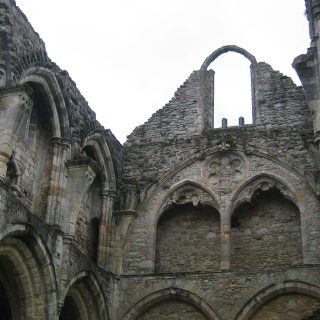
Netley Abbey was a Cistercian House founded in 1239 by Peter des Roches, Bishop of Winchester though he died before it was completed. Henry II took a keen interest in the Abbey and became its royal patron.
Anniversary Ghosts / Apparitions / Hauntings / Legends / Occult
by Ian · Published August 11, 2008 · Last modified December 29, 2018
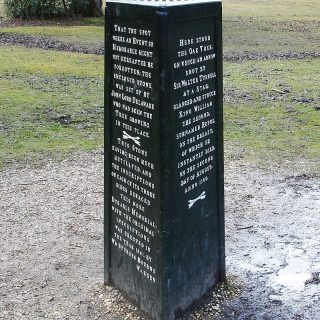
The Rufus stone (now encased in metal) erected by Earl De La Warr in 1745, marks the location where King William II of England (referred to as William Rufus due to his red faced complexion) died in a hunting accident on 2 August 1100. Some mystery still envelopes the events of his death.
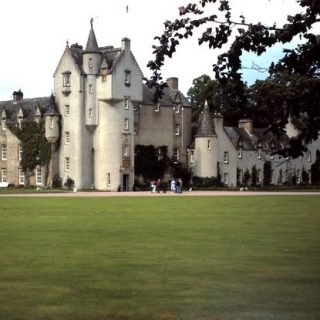
Ballindalloch Castle or the ‘Pearl of the North’ is the family home of the MacPherson-Grants and has remained in their family since it was built in 1546. It is supposed to be haunted by General James Grant (1722-1806), first British governor of East Florida, veteran of the French war, Indian War and the American War of Independence.
Anniversary Ghosts / Apparitions / Haunted Battlefields / Hauntings
by Ian · Published August 11, 2008 · Last modified December 20, 2018
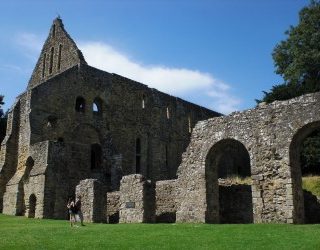
On 14 October 1066 the Battle of Hastings took place. The Saxon King Harold II, defending Britain with 7500 infantry engaged the invading Norman army of William Duke of Normandy. William had mustered a fleet of 700 ships to bring his 2200 cavalry, 1700 archers and 4500 infantry across the English Channel from Northern France.
Apparitions / Haunted Hotels / Haunted Pubs / Hauntings
by Ian · Published August 11, 2008 · Last modified December 21, 2018
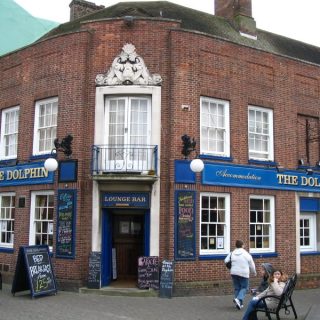
The Dolphin is an old coaching inn dating back to 1735. In the summer of 1806 the poet Lord Byron stayed at the Dolphin Hotel and supposedly nearly drowned as he was swimming in the nearby River Arun. The Dolphin would appear to be haunted by several different ladies and some ghostly children which have been seen and heard.
Apparitions / Civil War Hauntings / Hauntings
by Ian · Published August 11, 2008 · Last modified November 10, 2018
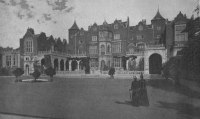
Situated in a 500 acre estate, some of which is now survives as Holland Park, the house was originally known as Cope Castle and was built in 1605 for Sir Walter Cope. His daughter married Henry Rich, 1st Earl of Holland (1590 – 9 March 1649) who inherited the property and is said to haunt it.
Apparitions / Green Ladies / Hauntings
by Ian · Published August 9, 2008 · Last modified December 8, 2018
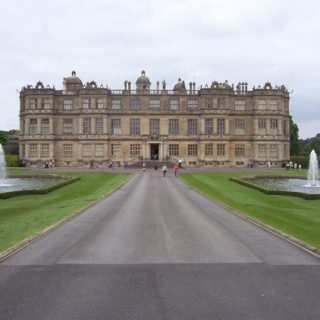
Longleat House is the home of the Thynne family and was built on the site of an old priory. The house like many of the old family stately homes has a multitude of ghost stories.
More
Recent Comments