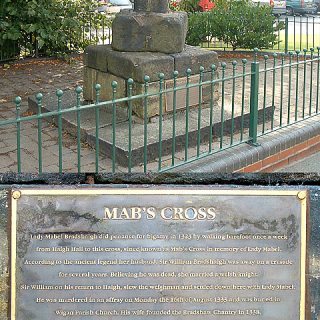
The remains of this 13th century (earliest known mention 1277) stone cross can be found on Standishgate and is thought to have been a medieval waymarker between Chorley and Wigan. It was moved from its original position on the other side of the road in 1922 when the road was widened. The cross’s name is derived from its legendary association with Lady Mabel Bradshaw. T
John Harland and T. T. Wilkinson give the following account of a haunting tradition in Lancashire Folk-lore (1867). ‘The following story is told and believed by some persons in Hornby. The Park Mistress may be supposed to be the ghost of Lady Harrington, who committed murder three hundred years ago. Margaret Brackin was born in 1745, and died in 1795.
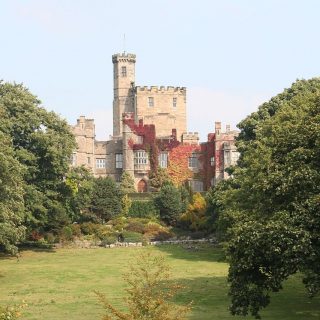
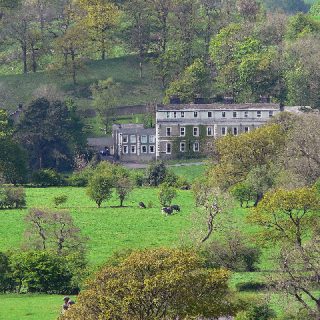
The Grade I listed Hornby Castle is a private residence and is not open to the public, though the castle gardens are opened up a few times a year for special events.
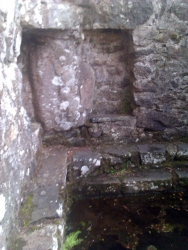
Saint Cybi’s Holy Well at Llangybi in North Wales is one of those mysterious and difficult to find places which turn out to be well worth the effort. Certain places have an almost otherworldly atmosphere about them and Saint Cybi’s Well is certainly one of these.
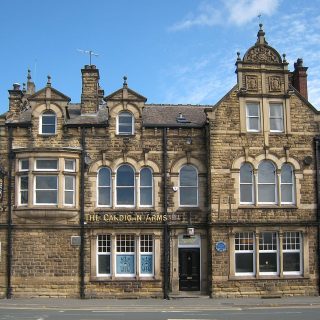
On 13th October 2006 strange experiences was reported by three separate women at the Cardigan Arms, 364 Kirkstall Road, Leeds. One of the women briefly saw the reflection of a middle-aged/elderly woman with long, straight grey hair in the mirror of the ladies toilet. No one was there when she turned around. One of the girls waited for a cubicle to be vacated.
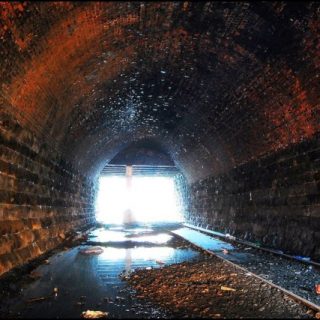
The Miley Tunnel running under Preston is 862 yards long and linked the Longridge line to the main Preston line. Opening in around 1840 for freight, the first passenger trains used the tunnel in 1856, though these stopped by 1930. Goods traffic also declined and by the 1980’s the line was unused. The tracks are still present but they are overgrown and the tunnel is abandoned.
The Grade II listed 17th century Waddow Hall has been owned by the Girl Guides Association since 1928. There is an old folk tradition associated with Waddow Hall and the ghost of Peg O’Nell or Peg o’ th’ Well. The following account of the tradition is extracted from ‘Lancashire Folk-lore’ (1867) by John Harland and T. T. Wilkinson.
Waddington Hall near Clitheroe is one of the locations that sheltered King Henry VI following his defeat at the Battle of Hexham in 1464 and it was shortly after leaving here that his was captured and taken to the Tower of London. The following story entitled ‘The Grey Man of the Wood or The Secret Mine’ appeared in John Roby’s ‘Traditions of Lancashire’ (1872)
Our Mysterious Britain & Ireland site uses cookies to improve your experience. We assume you are ok with this, but you can opt-out if you wish. AcceptRead More
Privacy & Cookies Policy
Privacy Overview
This website uses cookies to improve your experience while you navigate through the website. Out of these cookies, the cookies that are categorized as necessary are stored on your browser as they are essential for the working of basic functionalities of the website. We also use third-party cookies that help us analyze and understand how you use this website. These cookies will be stored in your browser only with your consent. You also have the option to opt-out of these cookies. But opting out of some of these cookies may have an effect on your browsing experience.
Necessary cookies are absolutely essential for the website to function properly. This category only includes cookies that ensures basic functionalities and security features of the website. These cookies do not store any personal information.
Any cookies that may not be particularly necessary for the website to function and is used specifically to collect user personal data via analytics, ads, other embedded contents are termed as non-necessary cookies. It is mandatory to procure user consent prior to running these cookies on your website.


Recent Comments