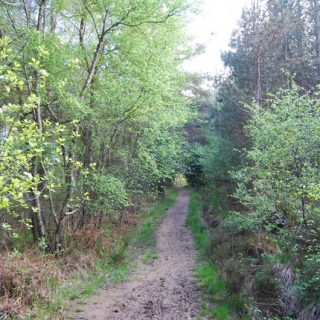
St. Leonards Forest Dragon (1614)
A pamphlet was printed in 1614 warning of a serpent in St. Leonards Forest. The text can be found below: True and Wonderful A Discourse relating a strange and monstrous Serpent (or Dragon) lately...
A pamphlet was printed in 1614 warning of a serpent in St. Leonards Forest. The text can be found below: True and Wonderful A Discourse relating a strange and monstrous Serpent (or Dragon) lately...
Apparitions / Book Review / Buried Treasure / Devil / Dragons / English Fairies / English Folktales / Fairies / Folklore / Folktales / Ghost Stories / Haunted Hotels / Haunted Pubs / Hauntings / King Arthur / Legends / Review / Road Ghosts / Screaming Skulls / Wells / Witchcraft
by Ian · Published March 21, 2016 · Last modified October 12, 2018
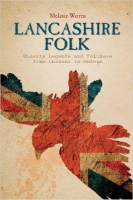
I’ve known Mel for over 20 years, meeting though ASSAP while investigating paranormal cases in the North of England. We share a passion for collecting stories and coming from Lancashire myself I have been looking forward to reading Mel’s new book and revisiting some of the old stories, coming across some new ones..and of course, I can now add the book to my collection!
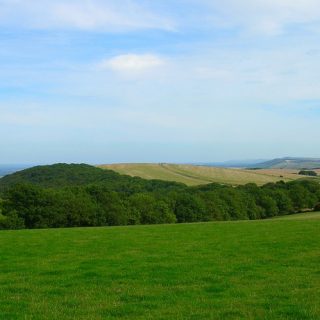
According to Sylvanus Urban’s ‘Gentleman’s Magazine and Historical Chronicle (1816)‘The old inhabitants of the place have a tradition now nearly lost that a large Dragon had its den on Bignor Hill and that marks of its folds were to be seen on the hill a relick of remote antiquity and of Celtic origin.’
Dragons / Folklore / Folktales / Irish Folktales / Legends
by Ian · Published September 25, 2013 · Last modified December 11, 2018
In ‘Irish Myths and Legends’ by Ronan Coghlan, we are told that Oilliphéist, is an Irish word meaning ‘dragon’ or ‘great worm’, and that ‘a creature of this sort, hearing that Saint Patrick was coming to drive out its kind, cuts its way through the land, thus forming the River Shannon.’ The Shannon is 224 miles long and the is Ireland’s longe
Ancient Sites / Apparitions / Celtic Pantheons / Dragons / Hauntings / Legends / Pantheons / Road Ghosts
by Ian · Published July 31, 2013 · Last modified January 1, 2019
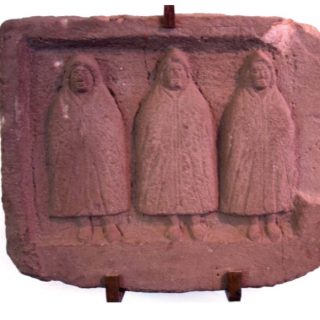
Drakelow in Worcestershire derives its name from a mythological creature – the dragon. The word for dragon in Germanic mythology and its descendants is worm (Old English: wyrm, Old High German: wurm, Old Norse: ormr), meaning snake or serpent. In Old English wyrm means "serpent", draca means "dragon" (Skeat).
According to ‘Lancashire Legends’ (1873) by John Harland & T T Wilkinson, ‘One of the most noted dragon stories of Lancashire has its locality assigned to Unsworth, a small village or hamlet about three miles from Bury.
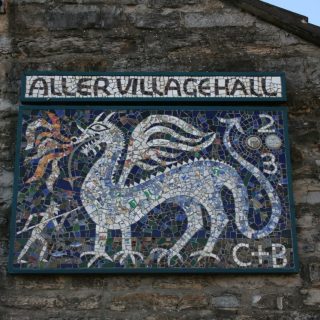
The dragon of Aller was a terrifying beast. It spat both fire and venom and flew on vast leathery wings. It lived in a hillside cave just outside of Aller and, as western dragons are want to do, laid waste to the land.
Dragons / Folklore / Folktales / Legends / Welsh Folktales
by Ian · Published March 10, 2012 · Last modified November 23, 2018
The Story of Llud and Llevelys appears in the The Mabinogion and here is the translation published by Lady Charlotte Guest (1877).
Dragons / Fairies / Folklore / Folktales / King Arthur / Legends / Welsh Fairies / Welsh Folktales
by Ian · Published January 30, 2012 · Last modified November 23, 2018
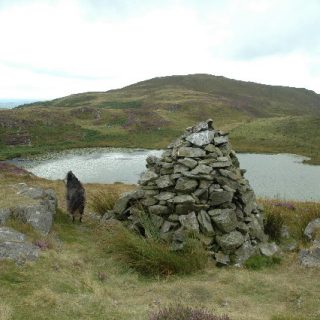
Llyn Barfog is situated in high countryside above the northern banks of the River Dyfi. The lake is isolated, small, and covered with yellow water lilies in the summer. Sir John Rhys in Celtic Folklore suggests that it was originally called Llyn-y-Barfog (The Bearded One’s Lake) referring to some ancient mythical being who would have lived there.
Aquatic Monsters / Cryptozoology / Dragons / Folklore / Legends
by Ian · Published January 29, 2012 · Last modified November 23, 2018
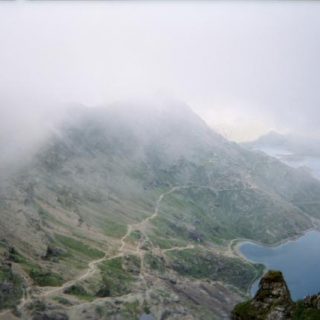
At 1,970 feet above sea level, and covering an area of 18 acres Llyn Glaslyn is one of the glacial lakes of Yr Wyddfa (Mount Snowdon), and being the highest and remotest of the larger lakes it abounds in legend.
More
Recent Comments