Gwrach-y-rhybin
A hideous hag who haunts Welsh families, and is also associated with specific places.
Fairies / Folklore / Welsh Fairies
by Ian · Published September 11, 2008 · Last modified January 2, 2019
A hideous hag who haunts Welsh families, and is also associated with specific places.
Fairies / Folklore / Welsh Fairies
by Ian · Published September 11, 2008 · Last modified January 2, 2019
A Welsh spirit similar to the English Will o’ the Wisp, it appears as a light and misleads travellers from their path.
Along with black dogs, tales of fairy lights are common throughout Britain, with a different name given to a similar phenomena. In general they are seen as malevolent, guiding lone travellers into treacherous bogs.
by Ian · Published September 11, 2008 · Last modified November 22, 2018
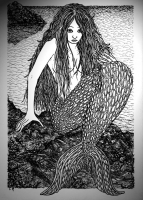
In legend a curse was put upon the town and its entire people by a mermaid hundreds of years ago. She was found stranded on the rocks at low tide by local fishermen, who would not return her to the water no matter how much she begged. She cursed the town saying that the people would always be poor. The curse is now said to have run its course.
Aquatic Monsters / Cryptozoology / Dragons / Folklore / Legends
by Ian · Published September 11, 2008 · Last modified November 22, 2018
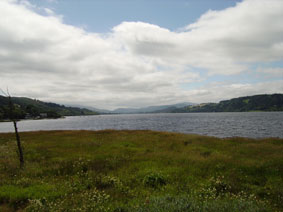
Llyn Tegid is Wales’s largest lake being nearly four miles long. It lies in a rift valley running north east to south west, extending down to the sea at Tywyn. The lake is 529 feet above sea level, has a maximum depth of 136 feet and covers an area of 1084 acres.
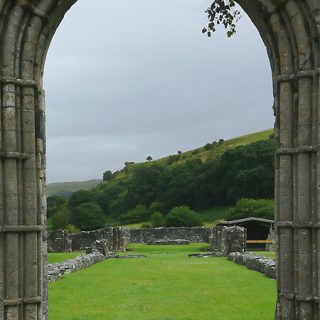
Ancient Sites / Apparitions / Early Christianity / Folklore / Hauntings
by Ian · Published September 11, 2008 · Last modified January 1, 2019
The abbey was founded in early part of the 13th century by the Cistercian monks, and was one of the grandest in Wales at its height. It was seen as a centre of education and political activity. The abbey was destroyed during the reformation.
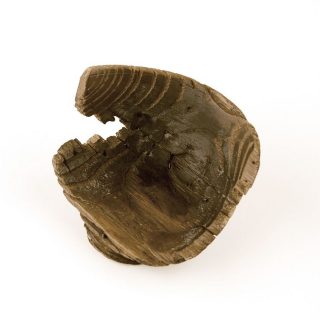
Apparitions / Haunted Hotels / Haunted Pubs / Hauntings / Legends
by Ian · Published September 11, 2008 · Last modified January 1, 2019
Nanteos means the valley of the nightingale, and is a Georgian mansion house built for Thomas Powell in 1739.
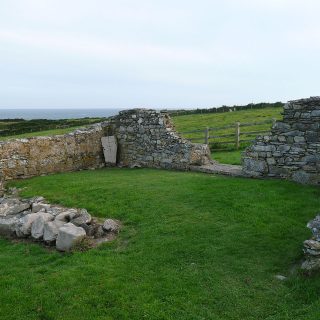
Ancient Sites / Early Christianity / Hauntings / King Arthur / Legends / Mabinogion / Wells
by Ian · Published September 11, 2008 · Last modified January 1, 2019
St David’s Peninsula is supposedly the landing place of Twrch Trwyth, the magical boar told in the story of Culhwch and Olwen in the Mabinogion, King Arthur features heavily in the story. It is also the place where St Patrick is said to have sailed for Ireland to convert them to Christianity.
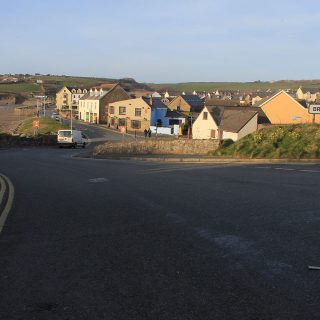
Broad Haven was the scene of a UFO flap during the late 1970’s. There were several reported sightings; the most widely publicised was the strange visitation to a field near to Broad Haven primary school in February 1977.
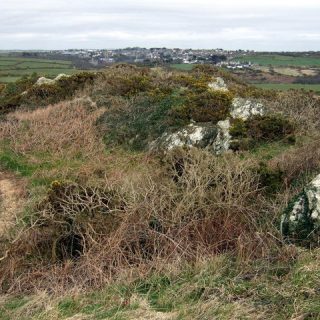
This rocky hilltop was occupied during the Neolithic period around 3800BC, when there were a number of rectangular houses on the summit. During the Iron Age the hill was fortified and served as a hillfort. A rampart, which can still be seen today, was completed around the hill with an entrance towards the Southwest.
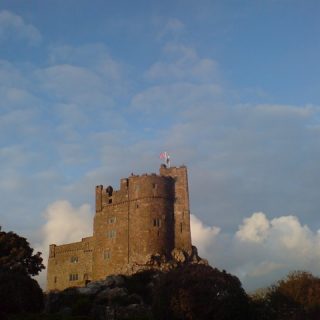
According to folklore Adam De La Roche, a Norman landowner was told by a local wise woman that he would die by the bite of an adder, but he could escape the prophesy if he managed to get through a predicted year in safety. He built Roch Castle (which dates from the 13th century) on the volcanic outcrop so that it was far above the surrounding landscape.
More
Necessary cookies are absolutely essential for the website to function properly. This category only includes cookies that ensures basic functionalities and security features of the website. These cookies do not store any personal information.
Any cookies that may not be particularly necessary for the website to function and is used specifically to collect user personal data via analytics, ads, other embedded contents are termed as non-necessary cookies. It is mandatory to procure user consent prior to running these cookies on your website.
Recent Comments