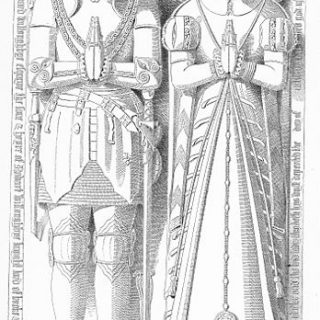
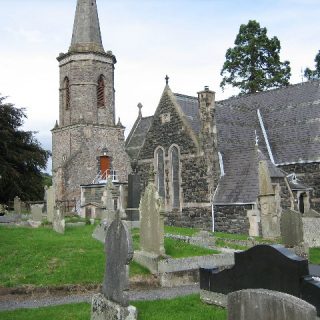
Inside the Parish Church of St Nicholas in Alcester (parts of which date back to the 14th century) can be found the tomb of Sir Fulke Greville (Died 10 November 1559) and his wife Elizabeth Willoughby, 3rd Baroness Willoughby de Broke, de jure 11th Baroness Latimer (Born 1512 – Buried 15 November 1562) and it was beside this tomb, according to the Paranormal Database, that the apparition of the af
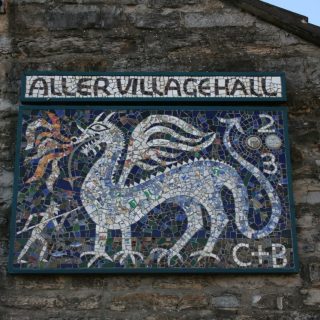
The dragon of Aller was a terrifying beast. It spat both fire and venom and flew on vast leathery wings. It lived in a hillside cave just outside of Aller and, as western dragons are want to do, laid waste to the land.
In his The Science of Fairy Tales’ (1891), Edwin Sidney Hartland gives the following description of a Changeling in Dumfries and Galloway. ‘In Nithsdale the elf-child displays a superhuman power of work. The mother left it on one occasion in the charge of a servant-girl, who sat bemoaning herself.
Edwin Sidney Hartland gives the following account of Dumfries and Galloway Changelings in his ‘The Science of Fairy Tales’ (1891). ‘A Kirkcudbrightshire tale represents a child as once left in charge of a tailor, who "commenced a discourse" with him. "’Will, hae ye your pipes?’ says the tailor. ‘They’re below my head,’ says the tenant of the cradle.
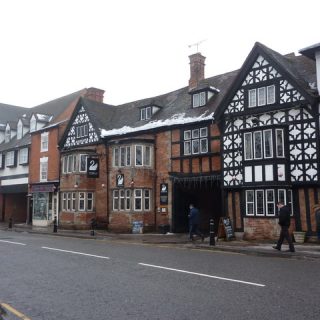
The reputedly haunted 16th century White Swan Hotel can be found on High Street in Henley-in-Arden. Built on the site of an earlier Inn which dated 1352, the present White Swan was built around 1550.
In the graveyard by the Parish Church of St Patrick, Drumbeg, is the grave of James Haddock who died in 1657. Five years later his ghost is said to made contact in a bid to ensure financial future of his son.
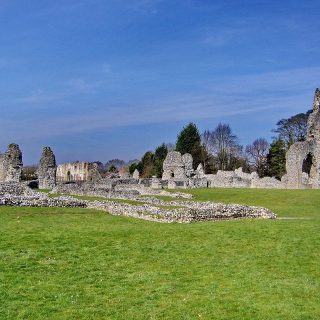
Founded by Roger Bigod, 1st Earl of Norfolk (died 1107), the 12th century ruined Priory of St Mary at Thetford has been the site of several reported sightings of what may have been black robed cluniac monks.
In September 2007 an unidentified animale tagged the Beast Banwell was seen by Helen Stokes whilst she walked her dog. The following article entitled ‘Back – the Beast of Banwell’ from the Eastern Daily Press website is dated 14 September 2007.
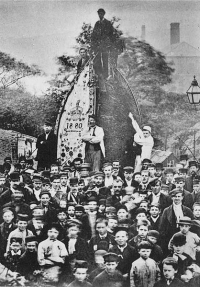
Rushbearing dates back to the middle ages and is a festival where rushes were collected to be strewn out over the floors of churches, back when the floors were just earthen. The tradition died off when church floors started to be flagged by the 19th century, though in some villages and towns it was revived as a folk custom.
Our Mysterious Britain & Ireland site uses cookies to improve your experience. We assume you are ok with this, but you can opt-out if you wish. AcceptRead More
Privacy & Cookies Policy
Privacy Overview
This website uses cookies to improve your experience while you navigate through the website. Out of these cookies, the cookies that are categorized as necessary are stored on your browser as they are essential for the working of basic functionalities of the website. We also use third-party cookies that help us analyze and understand how you use this website. These cookies will be stored in your browser only with your consent. You also have the option to opt-out of these cookies. But opting out of some of these cookies may have an effect on your browsing experience.
Necessary cookies are absolutely essential for the website to function properly. This category only includes cookies that ensures basic functionalities and security features of the website. These cookies do not store any personal information.
Any cookies that may not be particularly necessary for the website to function and is used specifically to collect user personal data via analytics, ads, other embedded contents are termed as non-necessary cookies. It is mandatory to procure user consent prior to running these cookies on your website.

Recent Comments