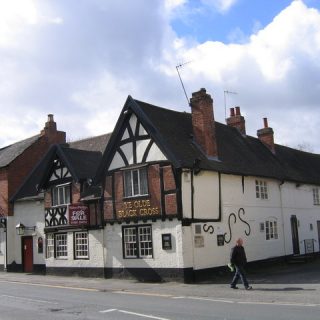
Ye Olde Black Cross at 70 Worcester Road in Bromsgrove dates back to 1640 and as well has being linked to King Charles II it has a reputation for being haunted, evidence of which it has been suggested was caught on CCTV (Closed Circuit Televison) camera footage.
February 2011: Construction of a ride at Thorpe Park called the Storm Surge has been put on hold and shifted to a new location as the original site was said to be haunted.
According to The Haunted Homes and Family Traditions of Great Britain by John Ingram (1897), the Saunders Newsletter which was a daily paper that running between 1755 and 1879 (being published daily from 1777) carried the following story concerning an experience at Hackwood House in one of it’s April 1862 publications.
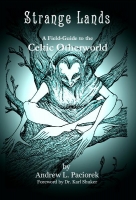
Andy Paciorek is one of Mysterious Britain & Irelands favourite contributors and his amazing artwork can be found illustrating articles throughout this site.
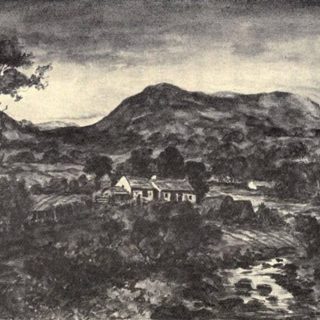
Not much now remains of the scene where this famous case took place, with just a single skeletal tree marking the location of the Ring Plantation at Ringcroft of Stocking where in 1695 the home of Andrew Mackie in the parish of Rerrick was reputedly haunted by a poltergeist and this caused a stir in Scotland after the case was published in a pamphlet by the local minister.
The Dunfermline artist Sir Joseph Noel Paton (13 December 1821 – 26 December 1901) wrote the following letter reciting a dream to Catherine Crowe on 31st May 1847. It was his mother Catherine McDiarmid Paton who was "deeply interested in tradition, folklore, the supernatural, and the fairy-stories of the Celts" that had had the dream around the year 1830.
Trinity is a mansion house district in Edinburgh that developed in the early 1800’s and was named after Trinity House in Leith. There was a suspected case of poltergeist activity in a house in Trinity around 1835 which led to a legal battle between the supposedly haunted Captain Molesworth and his neighbour and landlord, Mr Webster.
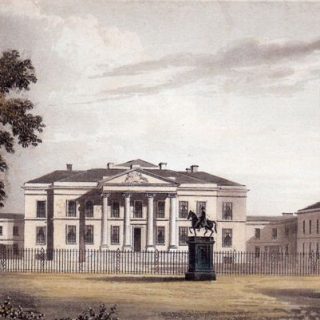
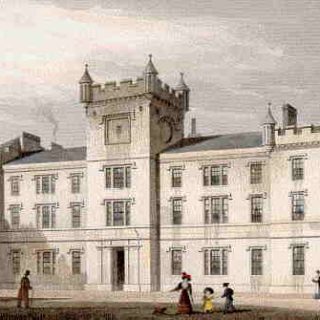
In 1798 the Wrichtishousis (Wrychtishousis or Wrightshouses) mansion was bought and subsequently demolished in 1800 to make way for a hospital and school, the legacy of the merchant James Gillespie (born 1726 – died 1797).
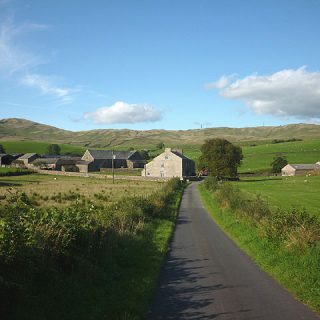
There is an interesting piece of folklore relating to a curse connected to an early Quaker named Francis Howgill (born 1618 – died 1669) and Grayrigg Hall, ancestral home of the Duckett family.
Our Mysterious Britain & Ireland site uses cookies to improve your experience. We assume you are ok with this, but you can opt-out if you wish. AcceptRead More
Privacy & Cookies Policy
Privacy Overview
This website uses cookies to improve your experience while you navigate through the website. Out of these cookies, the cookies that are categorized as necessary are stored on your browser as they are essential for the working of basic functionalities of the website. We also use third-party cookies that help us analyze and understand how you use this website. These cookies will be stored in your browser only with your consent. You also have the option to opt-out of these cookies. But opting out of some of these cookies may have an effect on your browsing experience.
Necessary cookies are absolutely essential for the website to function properly. This category only includes cookies that ensures basic functionalities and security features of the website. These cookies do not store any personal information.
Any cookies that may not be particularly necessary for the website to function and is used specifically to collect user personal data via analytics, ads, other embedded contents are termed as non-necessary cookies. It is mandatory to procure user consent prior to running these cookies on your website.

Recent Comments