Gold Hill Black Dog
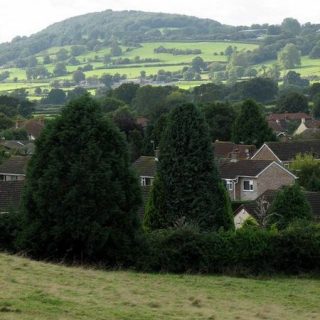
There is a black dog tradition thought to be attached to Gold Hill in Batcombe, described as having a chain around its neck. The associated story suggests that the dog’s owner in life buried it in woodland nearby.

There is a black dog tradition thought to be attached to Gold Hill in Batcombe, described as having a chain around its neck. The associated story suggests that the dog’s owner in life buried it in woodland nearby.
Ancient Sites / Devil / Early Christianity / Legends
by Ian · Published June 11, 2013 · Last modified November 21, 2018
A two feet high pillow mound earthwork shaped as a cross in Banwell has a Devil legend attached to it. According to the story, the villagers of Banwell attempted to erect a large cross on Banwell Hill, but each night the Devil would come along and blow it down. In order to prevent this the villagers decided to create the cross on the ground making it difficult for the Devil to destroy.
Anniversary Ghosts / Apparitions / Haunted Hotels / Haunted Wedding Venue / Hauntings
by Ian · Published June 9, 2013 · Last modified December 3, 2018
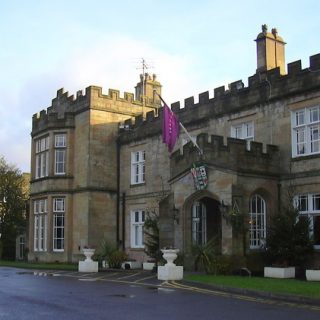
The 175 room, 4 star Mercure Blackburn Dunkenhalgh Hotel, is thought to be haunted by Lucette, a pretty, young, French governess for the Petre family who lived at Dunkenhalgh Hall when it was still a home.
English Folktales / Folklore / Folktales
by Ian · Published June 9, 2013 · Last modified December 3, 2018
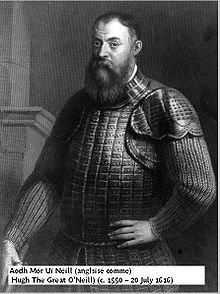
A History of the County of Lancaster: Volume 5 (1911) explains that ‘On the north side of Marland, by the Roch, is a wooded clough known as Tyrone’s Bed, a story invented by Roby and William Nuttall (d. 1840) gaining currency that the Earl of Tyrone, outlawed by Elizabeth, took refuge there.’ Below is the story of Hugh O’Neill (Hugh The Great O’Neill) (Born c.
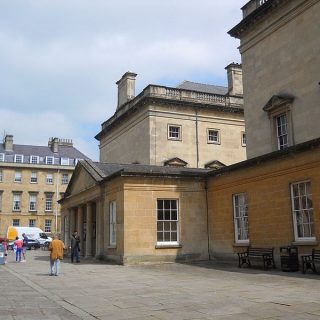
The Grade I listed Bath Assembly Rooms date from 1769 and were designed by John Wood, the Younger (Born 25 February 1728 – Died 18 June 1782). It is said to be haunted by a thin hunched figure wearing a black robe and large black hat. This figure is also thought the Saville Row which is behind the Assembly Rooms.
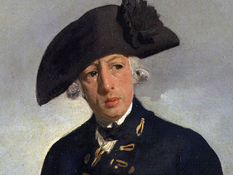
Admiral Arthur Phillip, the First Governor of Australia lived at 19 Bennett Street in Bath from 1806 and died here in 1814. The Dictionary of National Biography gives th efollowing account of his life and career. ‘PHILLIP, ARTHUR (1738–1814), vice-admiral and first governor of New South Wales, was born in the parish of Allhallows, Bread Street, London, on 11 Oct. 1738.
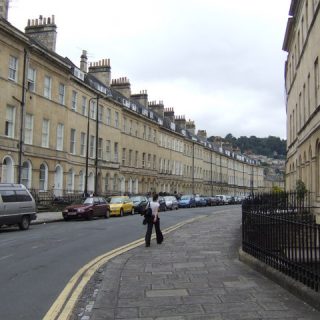
20 Henrietta Street is thought to be haunted by the disembodied footsteps of Rear Admiral Mark Robinson (25 April 1722 – 23 November 1799).
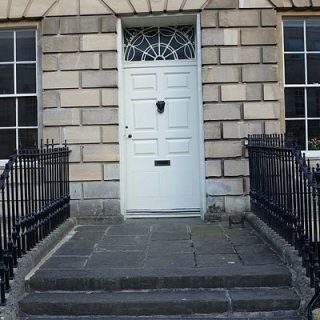
The plaque outside 71 Great Pulteney Street reads ‘Admiral Earl Howe K.G. lived here in 1794, 1795 & 1798. B. 1725 d. 1799’ and according to some sources his apparition was seen during the 1970’s in his uniform.
Apparitions / Hauntings / Poltergiests
by Ian · Published June 5, 2013 · Last modified December 17, 2018
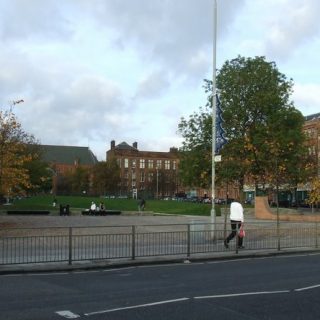
The following article entitled ‘Ghost is no joke for the Hanlons’ was published in the Glasgow Evening Times on 7 August 1961.
“We’ll never go near it again”
A shaken, sleepless man sat resting in his mother’s home to-day while six miles away a whole street argued furiously about the ghost he left behind him.
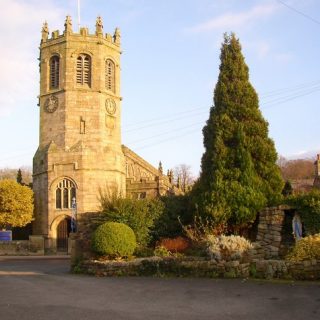
The Grade I listed St Margaret’s Church in Hornby was founded by Sir Edward Stanley, Lord Mounteagle, in 1514, the tower of which still stands. (An earlier church had been on the site dating from around 1338).
More
Recent Comments