This is the best example of a Roman amphitheatre in Britain. Until 1926 when serious excavations were undertaken at the site, it was considered to be a circular earthwork and linked to the legend of King Arthur being known as his Round Table.
The Association for the Scientific Study of Anomalous Phenomena (ASSAP) has been investigating the weird seriously (and the seriously weird) since 1981. Our main aims are paranormal research and education. Anomalous phenomena include psychic phenomena, UFOs, Forteana and earth mysteries.
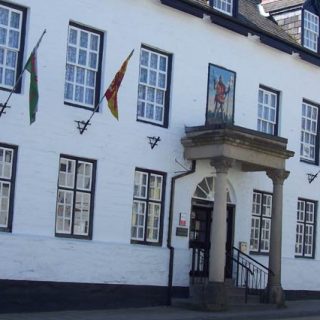
Named after Owain Glyndwr the great Welsh hero who had strong connections with Corwen, this is probably one of the oldest hotel buildings in Wales dating back to 1329. The building was originally a monastery attached to the church behind and later a coaching inn.
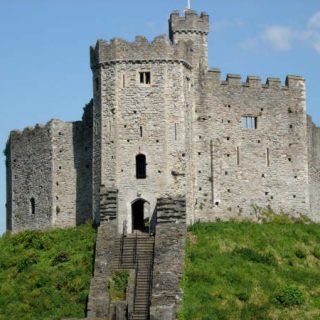
This site has been used for military installations since 55AD when the first Roman fort was built upon it during the pacification of the Silures Tribe.
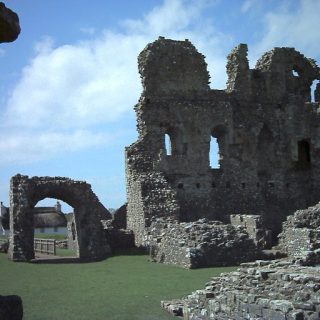
A ghostly White Lady is supposed to have killed a greedy treasure seeker in these ruins. On his first visit he had encountered the ghost and tried to speak to her for which he was rewarded a few coins from the treasure she guards. He made a return visit to alleviate her of the burden of looking after so much treasure, but was caught by the White Lady who scratched him.
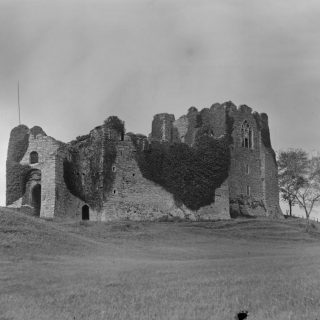
Oystermouth Castle set in the Gower Peninsula was first built in 1106 by William de Londres of Ogmore Castle. In 1116 the Welsh rove him out and burnt the castle down. It was destroyed again by the Welsh in 1137 after being rebuilt. The Gower Lordship was given to John de Braose who also owned Swansea Castle after the area had become more stabilized by 1220.
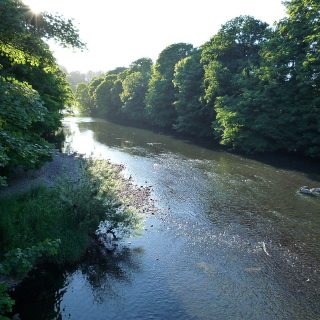
A worm type of dragon was supposed to live at the bottom of a whirlpool in the River Taff. It was said to drown people and suck down their bodies to eat.
The above was taken from an article by Richard Freeman.
Our Mysterious Britain & Ireland site uses cookies to improve your experience. We assume you are ok with this, but you can opt-out if you wish. AcceptRead More
Privacy & Cookies Policy
Privacy Overview
This website uses cookies to improve your experience while you navigate through the website. Out of these cookies, the cookies that are categorized as necessary are stored on your browser as they are essential for the working of basic functionalities of the website. We also use third-party cookies that help us analyze and understand how you use this website. These cookies will be stored in your browser only with your consent. You also have the option to opt-out of these cookies. But opting out of some of these cookies may have an effect on your browsing experience.
Necessary cookies are absolutely essential for the website to function properly. This category only includes cookies that ensures basic functionalities and security features of the website. These cookies do not store any personal information.
Any cookies that may not be particularly necessary for the website to function and is used specifically to collect user personal data via analytics, ads, other embedded contents are termed as non-necessary cookies. It is mandatory to procure user consent prior to running these cookies on your website.

Recent Comments