You are hereLegends

Legends


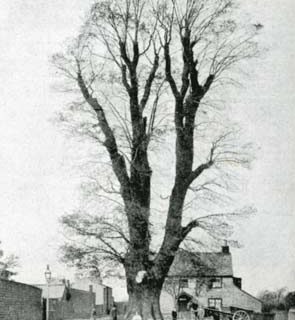
Legend Of The Pollard Brawn

Legend has it that at some time in the middle ages the Bishop Auckland area was the haunt of a huge, ferocious brawn (or boar), which terrorised this part of the Wear valley in much the same way as the Lambton worm at Chester le Street. Read More »

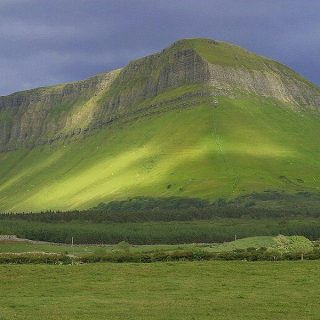
The Linton Worm

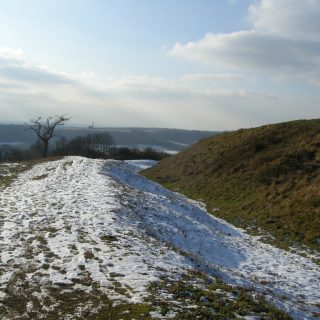
During the twelfth century a worm lived in a hollow on the Northeast side of Linton Hill (called Worms Den today). Read More »

Little St. Hugh of Lincoln

Stories of blood libel are not unfortunately unknown in Britain and like central Europe we have our antisemitic stories such as those surrounding William of Norwich, Simon of Trent, Robert of Bury, Harold of Gloucester and Little St. Hugh of Lincoln. Read More »

Llanarth Church

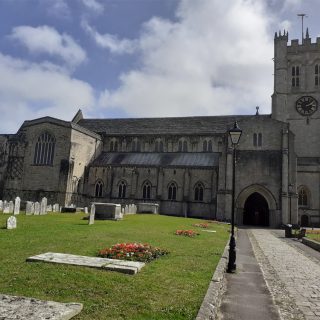
Llanarth church is associated with a legend of the Devil; unusually the Devil creeps into the church and tries to steal one of the church bells. (It is more common for him to steal the whole church). In the process of his theft he wakes the vicar who challenges him with the name of Christ. Eventually the Devil concedes, and jumps off the church tower. Read More »

Llanfihangel Geneu'r Glyn Parish Church

The following legend concerning Llanfihangel Church was give to Elias Owen by Rev. J Felix, vicar of Cilcen, near Mold and subsequently published in his 'Welsh folk-lore' (1887). Read More »

Llangar Church, Corwen

The white washed Llangar Church can be found about a mile from Corwen and can be dated from the late 13th century though it could possibly be as old as the 11th century. Its original name of 'Llan Garw Gwyn' (The Church of The White Deer) possibly alludes to a legend dating back its initial erection. Read More »

Lludd (Llud) and Llefelys (Llevelys)

The earliest origins of this story are obscure, but it first appears in the twelfth century, when Geoffrey of Monmouth included it in his History of the Kings of Britain. Monmouth's version was the basis for what is perhaps the best-known version, which appears in 'The Mabinogion', the collection of old Welsh stories compiled by Lady Charlotte Guest in the late 19th century.
Read More »

Llyn Barfog (The Bearded Lake)

Llyn Barfog is situated in high countryside above the northern banks of the River Dyfi. The lake is isolated, small, and covered with yellow water lilies in the summer. Sir John Rhys in Celtic Folklore suggests that it was originally called Llyn-y-Barfog (The Bearded One’s Lake) referring to some ancient mythical being who would have lived there. Read More »

Llyn Cau

Llyn Cau

The glacial lake of Llyn Cau at Cader Idris is said to be bottomless and according to tradition it is thought to be the home of a lake monster responsible for drowning a man who went swimming in the cold waters. Read More »

Llyn Glaslyn (Lake of the Blue Spring)

At 1,970 feet above sea level, and covering an area of 18 acres Llyn Glaslyn is one of the glacial lakes of Yr Wyddfa (Mount Snowdon), and being the highest and remotest of the larger lakes it abounds in legend. Read More »

Llyn Idwal

Llyn Idwal is a small glacial lake in Snowdonia, easily accessible from the A5. The path begins at Ogwen Cottage at the foot of Llyn Ogwen, crosses a stream and then turns right after a quarter of a mile in to Cwm Idwal, a dramatic valley surrounded by the crags of Glyder fawr, Twll Du (‘The Black Hole’ or more popularly known as ‘the Devils Kitchen’) and Y Garn. Read More »

Llyn Llydaw (Brittany Lake)

At 1,430 feet above sea level Llyn Llydaw (Brittany Lake) is another sterile glacial lake of Yr Wyddfa (Mount Snowdon) in its eastern valley Cwn Dyli. It has an industrial air about it, and it has the Miners’ track crossing its eastern end by a causeway that was built in 1853 when the lake was lowered. Read More »

Llyn Morwynion ‘Lake of the Maidens’

Llyn Morwynion is probably the lake where, according to the Mabinogion, Blodeuedd and her Maidens of Ardudwy drowned whilst fleeing from the wizard Gwydion and the men of Gwynedd. Read More »

Llyn Ogwen

Llyn Ogwen

Four miles North from Capel Curig along the A5; and at 310 metres above sea level you’ll find Llyn Ogwen covering an area of 78 acres. Its ancient name was reportedly Ogfanw (young pig); and it is one of the shallowest lakes in North Wales, averaging 6 feet, and only being 10 feet at its deepest point. Read More »

Loch Awe

Loch Awe is Scotlands third largest fresh water loch at with a length of 35km and total surface area of 14.9 miles. It shares a common legend about its creation which concerns a well that flooded. Read More »

Loch Maree

Until the middle of the 18th century bulls were sacrificed on August 25th (St Maerlrubha’s Day) to dragons that dwelt in the lake. These may have been akin to the creatures still reported in other Scottish Lochs to this day.

Taken from an article by Richard Freeman.

Lochmaben Stane (Stone)

The Lochmaben Stane (or Lochmabenstane, Lochmabenstone, Clochmabenstane, Old Graitney Stone, Lowmabanstane, Loughmabanestane) stands in a farmers field near where the Kirtle Water enters the Solway Firth. Made if granite, it measures 7-8 feet in height and has a girth between 18 and 21 feet (depending upon your source). Read More »

Loe Pool

The Pool has a King Arthur legend, and along with Dozmary pool is supposedly the body of water from which he received Excalibur from the lady of the lake.

A high bar of shingle, called Loe bar separates the pool from the sea. Jan Tregeagle is supposed to have been tripped by demons while engaged in one of his tasks. He dropped a sack full of sand and created Loe Bar. Read More »

Long Compton

About a mile from the Rollright Stones, it was once it was said that ‘There are enough witches in Long Compton to draw a load of hay up Long Compton Hill.’ Roy Palmer in his 'The Folklore Of Warwickshire' gives the following brief account of account of someone contacting the D Read More »

Long Meg and Her Daughters

Long Meg Portrait

A weight of awe, not easy to be bourne,
Fell suddenly upon my spirit - cast
From the dread bosom of the unknown past
When first I saw that family forlorn..
Read More »

The Longwitton Dragon

In a wood near to the town of Longwitton there are three wells reputed to have healing powers. The waters were used far and wide for healing purposes. Read More »

Lordscairnie Castle

The castle has links with the legend of the more infamous Glamis Castle. Read More »

Lough Derg

Lough Derg is a 2200 acre lake in County Donegal, famous for St Patrick's Purgatory which is still a popular of pilgrimage as it has been many centuries. Read More »

The Lyme Regis Black Dog

Black Dogs

This old story provides an explanation for the naming of the Black Dog Inn near Uplyme in Devon. The black dog seems to be a spirit guardian of treasure. Read More »

Machrie Moor Stone Circles

Three of the tall sandstone pillars

The Isle of Arran, off the West Coast of Scotland, has many stone circles and standing stones dating from the Neolithic period and the early Bronze Age. The finest collection of circles can be found on Machrie Moor, on the West of the island. The whole moorland is littered with the remains of early man, from hut circles to chambered cairns and solitary standing stones. Read More »


Share/Save

Navigation

Recent comments

Book Review

Haunted Wales: A Guide To Welsh Ghostlore by Richard Holland

Haunted Wales

The ghosts of Wales are bold and memorable, forceful in character often terrifying and sometimes even dangerous. In a new book by Richard Holland and published by The History Press you realise that Wales is a fearfully haunted place with possibly more ghosts and goblins than in England or any other country. Read More »

Featured Site